


The AI landscape underwent a seismic transformation in 2025, marked not just by incremental improvements in benchmark scores, but by some serious fundamental shifts that very much redefined how businesses deploy and benefit from AI technology. While headlines kept chasing the narrative of “smarter” models, the real story emerged from three critical developments:
dramatic cost reductions,
the mainstreaming of autonomous AI agents, and
the closing gap between open-source and proprietary systems.
These changes didn’t just make AI better but they made it accessible, practical, and economically viable for organizations of all sizes that were previously priced out of the market.
Here ‘s a quick TL;DR before we take a deep dive on what and how it happened.
TL;DR
𝟭. 𝗗𝗲𝗲𝗽𝗦𝗲𝗲𝗸 𝗕𝗿𝗼𝗸𝗲 𝘁𝗵𝗲 𝗣𝗿𝗶𝗰𝗶𝗻𝗴 𝗠𝗼𝗱𝗲𝗹
→ Trained R1 for $294,000 (vs. hundreds of millions for Western models)
→ Inference 20-50x cheaper than competitors
→ Wiped $1 trillion off US tech stocks in one day
Impact: Startups can now build AI products that were financially impossible 12 months ago. The cost barrier collapsed.
𝟮. 𝗔𝗴𝗲𝗻𝘁𝗶𝗰 𝗔𝗜 𝗪𝗲𝗻𝘁 𝗠𝗮𝗶𝗻𝘀𝘁𝗿𝗲𝗮𝗺
→ OpenAI Operator launched January, now integrated into ChatGPT
→ Claude Opus 4.5 (released Nov 23) runs 30-minute autonomous coding sessions
→ Anthropic’s agents now self-improve peak performance in 4 iterations
Impact: AI shifted from “answer questions” to “complete tasks.” That’s a workflow revolution, not an upgrade.
𝟯. 𝗧𝗵𝗲 “𝗦𝗺𝗮𝗿𝘁𝗲𝘀𝘁 𝗠𝗼𝗱𝗲𝗹” 𝗥𝗮𝗰𝗲 𝗕𝗲𝗰𝗮𝗺𝗲 𝗜𝗿𝗿𝗲𝗹𝗲𝘃𝗮𝗻𝘁
GPT-5 launched August. Reviews were... mixed.
GPT-5.1 followed November 12 fixing the “robotic tone” complaints.
Claude Opus 4.5 dropped November 23 broke a benchmark by being too clever.
Oh and Gemini 3 released same week, was deemed the most intelligent.
Impact: Benchmarks stopped mattering.
What matters now?
• Which model follows YOUR instructions best
• Which one stays reliable for 30+ minutes
• Which one costs less per task
𝟰. 𝗖𝗼𝗻𝘁𝗲𝘅𝘁 𝗪𝗶𝗻𝗱𝗼𝘄𝘀 𝗘𝘅𝗽𝗹𝗼𝗱𝗲𝗱
→ Gemini 2.5 Pro: 1M tokens (~1,500 pages)
→ GPT-5: 400k tokens
→ Claude: 200k tokens with context compaction
Impact: You can now feed entire codebases, full legal contracts, or months of data into a single conversation. This unlocks use cases that weren’t possible before.
𝟱. 𝗢𝗽𝗲𝗻 𝘃𝘀 𝗖𝗹𝗼𝘀𝗲𝗱 𝗦𝗼𝘂𝗿𝗰𝗲 𝗚𝗮𝗽 𝗖𝗹𝗼𝘀𝗲𝗱
→ Qwen 3 Max: 80.6% on AIME, 100+ languages
→ DeepSeek V3: Competing with GPT-4 at fraction of cost
→ Llama, Mistral pushing boundaries
Impact: Enterprises now have real choices. Lock-in to one provider? Optional.
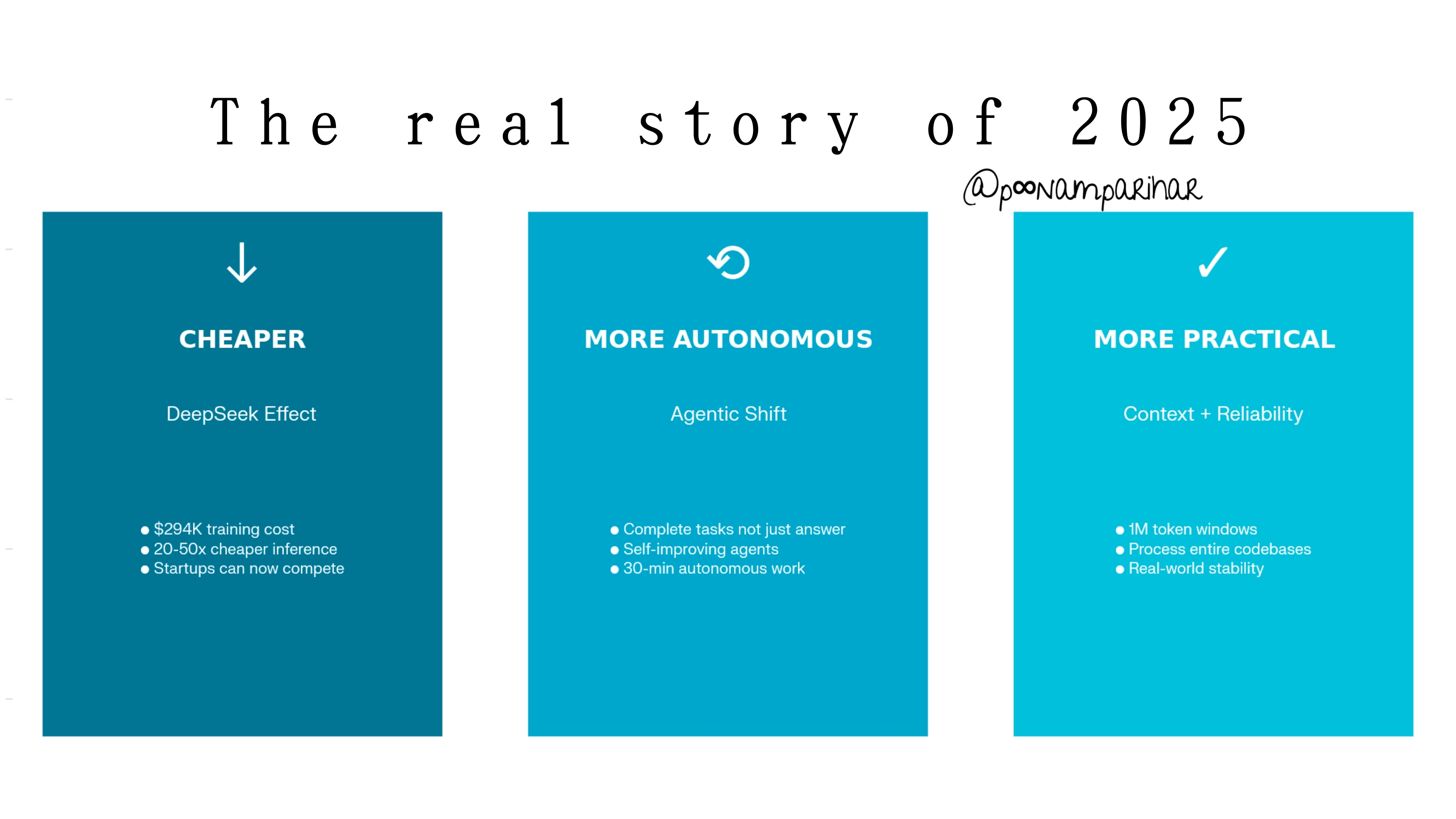
The real story of 2025 isn’t “AI got smarter.”
It’s that AI got:
• Cheaper (DeepSeek effect)
• More autonomous (agentic shift)
• More practical (context + reliability)
That’s what changes businesses. Not benchmark scores.
Now lets look in to it in detail.
1 - How it all began in 2025: DeepSeek shattered the cost barrier
The most disruptive development of 2025 came not from Silicon Valley, but from China. DeepSeek, a subsidiary of the quantitative hedge fund High-Flyer, released its R1 model in January that sent shockwaves through global technology markets: the model cost just $294,000 to train. The figure stood in stark contrast billions that Western AI labs had invested in comparable systems. And with Sam Altman previously stating Open AI foundational model training costs exceeded “much more” than $100 million, DeepSeek’s achievement appeared almost impossibly efficient.
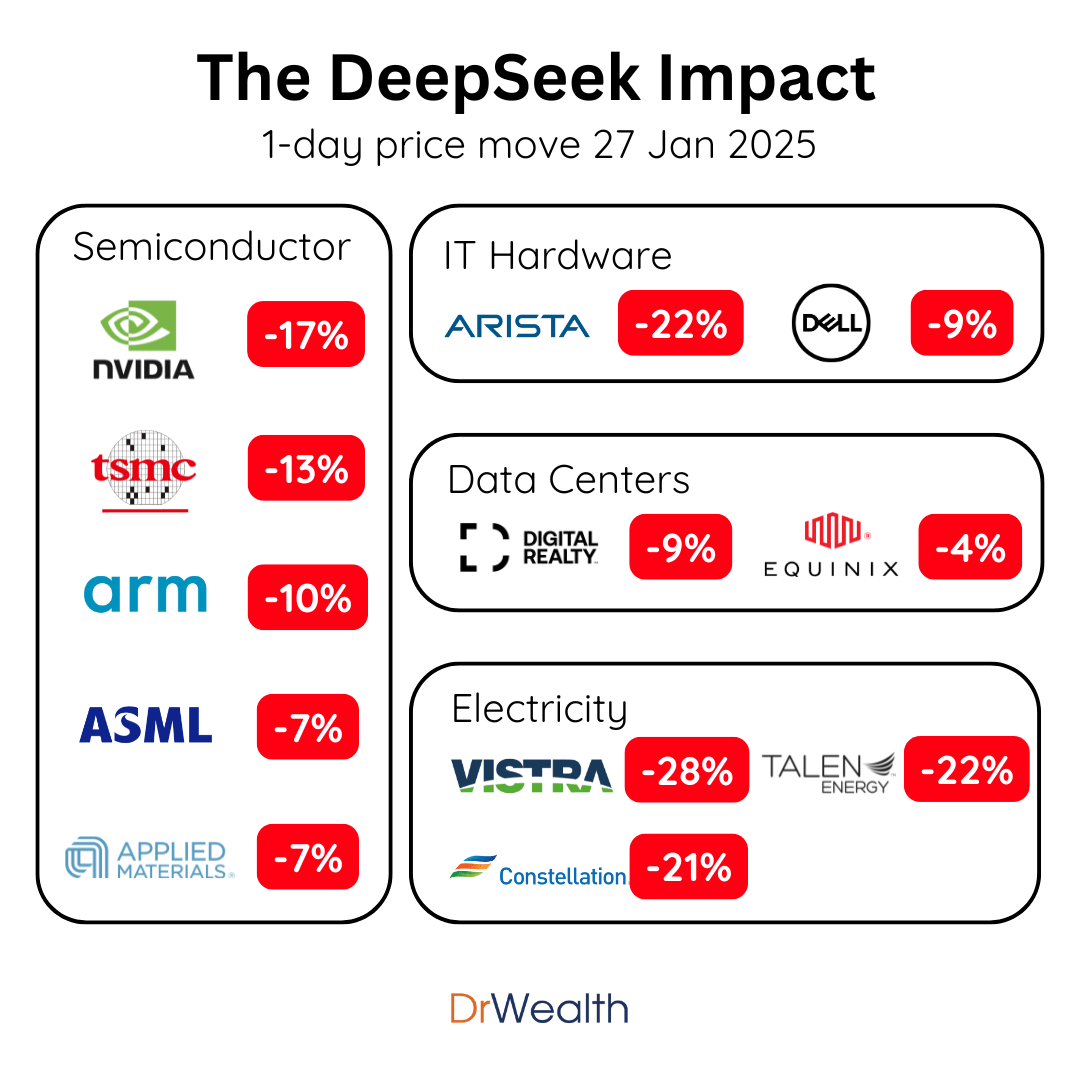
The market of course reacted immediately. The technology stocks experienced their largest single-day decline since the early pandemic period, with nearly $1 trillion wiped off the market capitalization of US tech companies. Nvidia saw its stock plummet 17%, erasing approximately $593 billion in value. The sell-off extended across the entire AI supply chain, affecting semiconductor manufacturers, power infrastructure companies, and cloud service providers.
