Are You Fluent or Just Flashy? The Deep Tech AI Skills Divide - The 7 Deadly Sins
Part 1 of the 3 part series: What Real AI Fluency Looks Like Beyond the Buzzwords!

Most people see AI literacy as those short courses teaching trendy buzzwords or showing how to use a tool for ads and social media. But that’s just scratching the surface, and not even close to real AI fluency, maybe only 5-10% of what’s that actually useful. True AI fluency goes much deeper: it’s about working with AI to solve everyday problems, thinking critically about what it tells you, and knowing how to use it in real work.
You’ll also see a lot of “AI experts” online. some are genuinely experienced and want to help, but many are simply cashing in with flashy courses or social media tips. Just because someone knows the latest keywords or tools or can run an automated workflow doesn’t mean they understand how AI works behind the scenes, or what really makes it valuable. Real AI skills go beyond marketing talk, and that requires knowing the tech, understanding its limits, and using it smartly for real impact. If all you know are a few tricks or keywords, you’re missing the bigger picture - AI fluency means knowing how, when, and why to put AI to work. It means you can apply, adapt, and innovate. and the real challenge is moving from surface skills to deep understanding, which is where genuine AI fluency begins.
At a moment when artificial intelligence promises to reshape entire industries, a sobering reality confronts organizations worldwide: 42% of companies abandoned most of their AI initiatives in 2025, up from just 17% in 2024. Even more striking, between 70-85% of generative AI deployments fail to meet their expected return on investment. These failures stem not from technological limitations but from a more fundamental deficit, the absence of AI fluency combined with deep tech mastery.
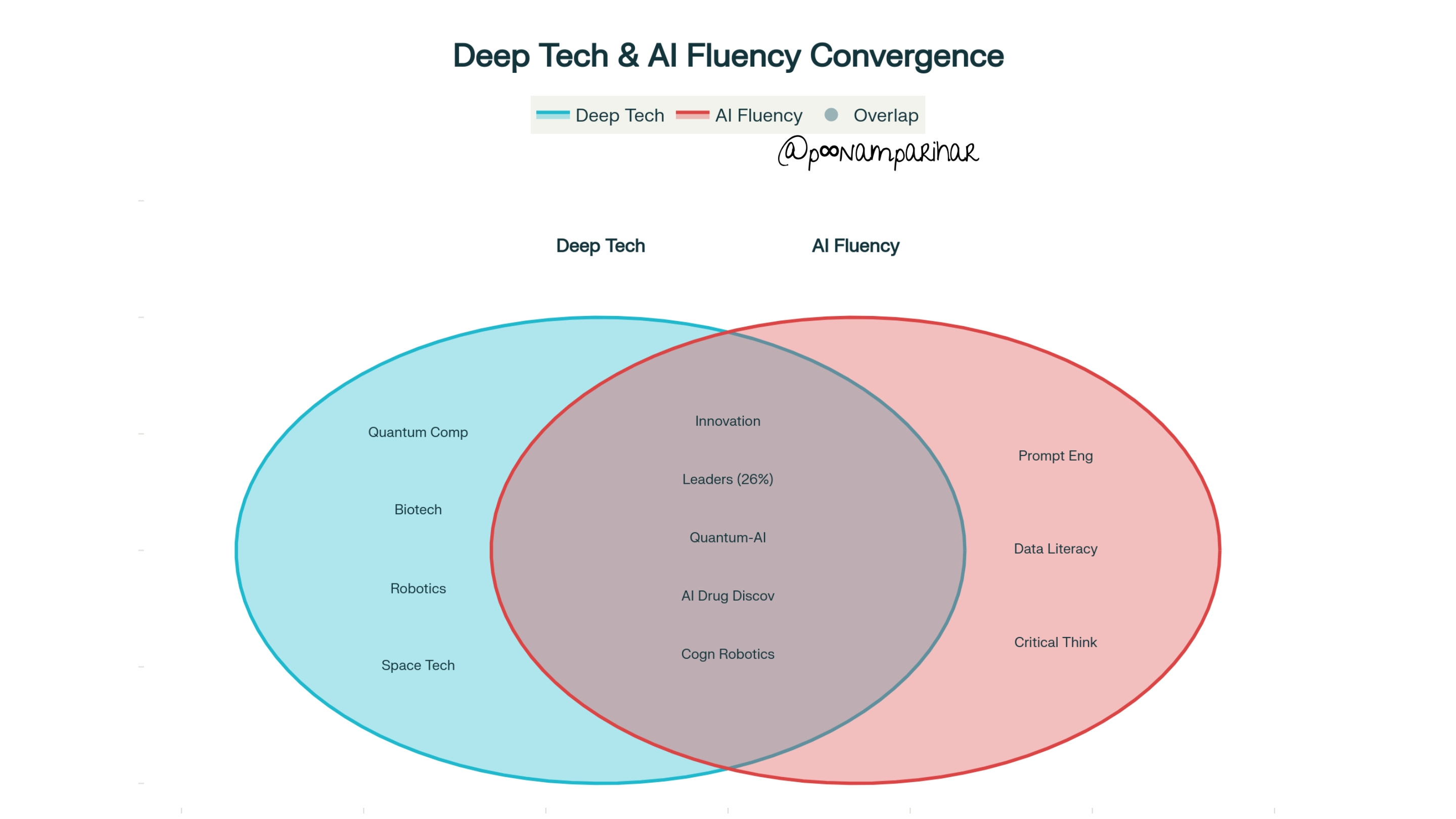
The intersection of AI fluency and deep tech represents the next frontier of competitive advantage. While AI fluency empowers individuals to work effectively with artificial intelligence systems, deep tech encompasses the scientific breakthroughs and engineering innovations that solve humanity’s most complex challenges. Organizations that master both dimensions understanding how to leverage AI responsibly while navigating the lengthy development cycles and capital-intensive nature of deep tech and position themselves among the elite 26% achieving tangible value from their AI investments.
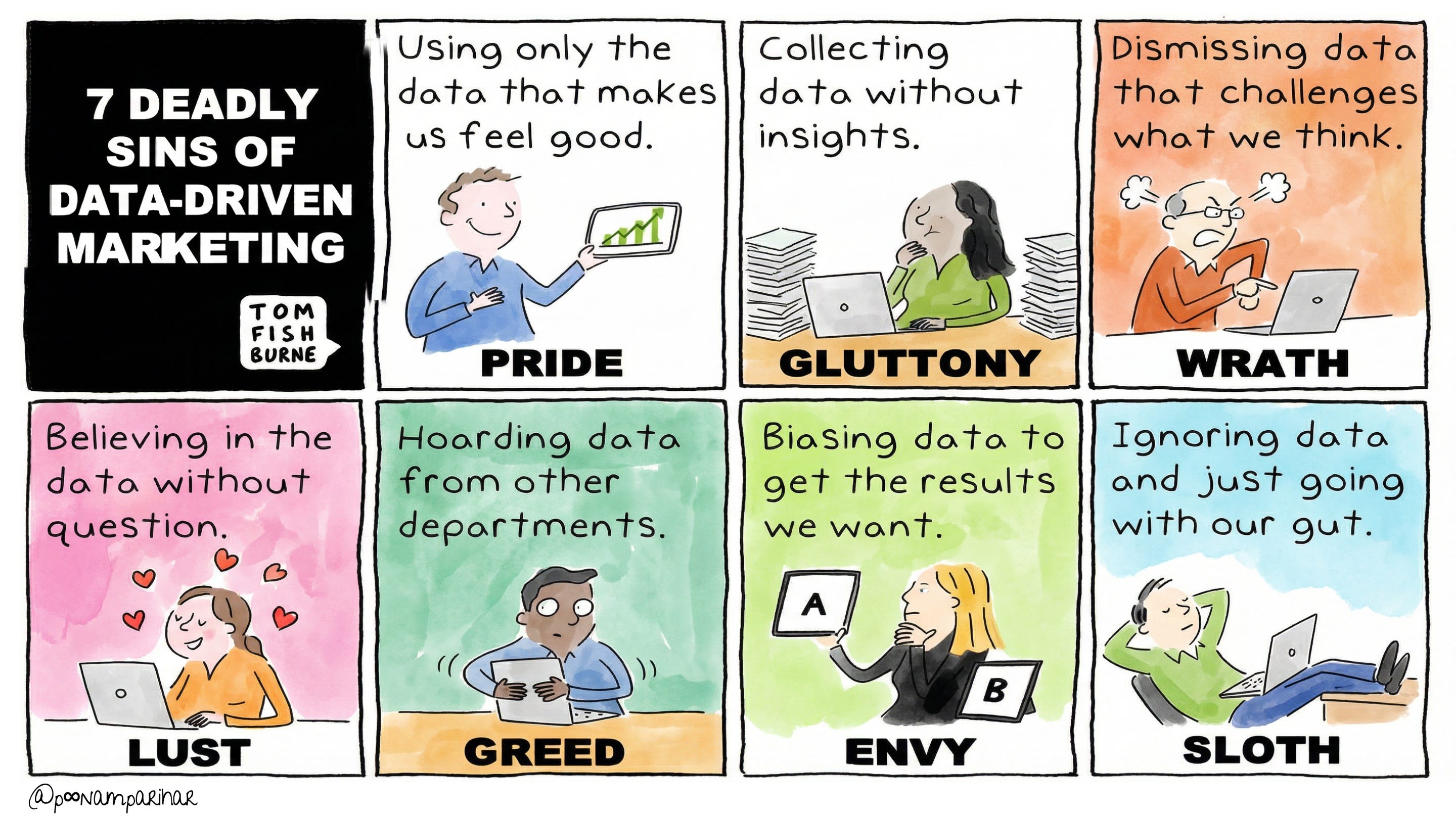
The other day I was looking at this Tom Fishburne’s “Seven Deadly Sins of Data-Driven Marketing”illustration and I thought this doesn’t just apply in marketing but if we convergence deep tech and AI fluency, this framework very much illuminates the critical missteps that sabotage innovation and the proven strategies that drive transformational success.
In the sections ahead, we’ll dive into what real AI fluency looks like when paired with cutting-edge deep tech, the mistakes organizations make, and how you can build lasting, practical skills to truly lead in this new era.
Defining Deep Tech in the Modern Innovation Landscape
Deep tech refers to technologies built on substantial scientific research or meaningful engineering innovation, characterized by lengthy development cycles (typically 5-10 years), high capital requirements, and high barriers to entry. Unlike typical software startups that can iterate rapidly with minimal capital, deep tech ventures tackle fundamental challenges in fields ranging from quantum computing and biotechnology to advanced materials and space technology.
The European Deep Tech Talent Initiative identifies fifteen critical sectors including
quantum computing,
biotechnology,
artificial intelligence,
robotics,
semiconductors,
clean energy, and
brain-computer interfaces.
These technologies share common attributes: they emerge from years of research, create defensible intellectual property, and possess the potential to transform entire industries while addressing global challenges like climate change and healthcare accessibility.
Hardware-focused deep tech startups deliver a gross internal rate of return of 27%, significantly outperforming software counterparts at 13%, challenging the long-standing venture capital preference for software investments. This paradigm shift reflects deep tech’s inherent defensibility “patents, domain expertise, and physical infrastructure” create sustainable competitive advantages that pure software businesses struggle to replicate.
The AI Fluency Imperative
AI fluency transcends basic digital literacy, representing the ability to understand, work with, and strategically integrate artificial intelligence technologies into decision-making, problem-solving, and business processes.
As of February 2025, the EU AI Act mandates AI literacy for all employees working with AI systems, transforming fluency from a competitive advantage into a regulatory requirement.
Research from the Georgia Institute of Technology identifies over a dozen competencies comprising AI literacy, including
recognizing AI’s strengths and limitations,
understanding how AI decisions are made,
detecting AI bias, and
evaluating ethical implications.
Yet despite this imperative, 52% of workers report not knowing how to use AI effectively, and nearly half of businesses surveyed have had fewer than five hours of AI training.
The consequences of this skills gap manifest dramatically: MIT analysis reveals that 95% of GenAI pilots fail because companies attempt to eliminate the very friction that generates value. Organizations pursuing generic AI tools achieve high adoption but low transformational impact, while the successful 5% invest in custom-built enterprise solutions that embrace necessary complexity.
Technology Convergence as the Fourth Wave of Innovation
The convergence of deep tech domains previously considered unrelated defines the current innovation landscape. The World Economic Forum’s 2025 Technology Convergence Report identifies AI as the primary catalyst, acting as connective tissue that enhances nearly every domain it touches from optimizing spatial environments through digital twins to enabling decentralized decision-making through agentic systems.
This convergence manifests in breakthrough applications.
Cognitive robotics combines agentic AI, spatial intelligence, and robotic systems to enable intelligent, autonomous action in complex environments. Hybrid quantum-classical computing harnesses quantum power while anchoring it in classical reliability for practical applications in finance and molecular simulation. Materials informatics employs predictive models to virtually test material combinations before laboratory synthesis, dramatically accelerating R&D cycles.
China’s 14th Five-Year Plan exemplifies strategic convergence, listing quantum information and brain-like intelligence in the same policy paragraph to explicitly tie quantum research to artificial general intelligence ambitions. This integrated approach recognizes that breakthrough innovations emerge not from isolated technologies but from their synergistic combination.
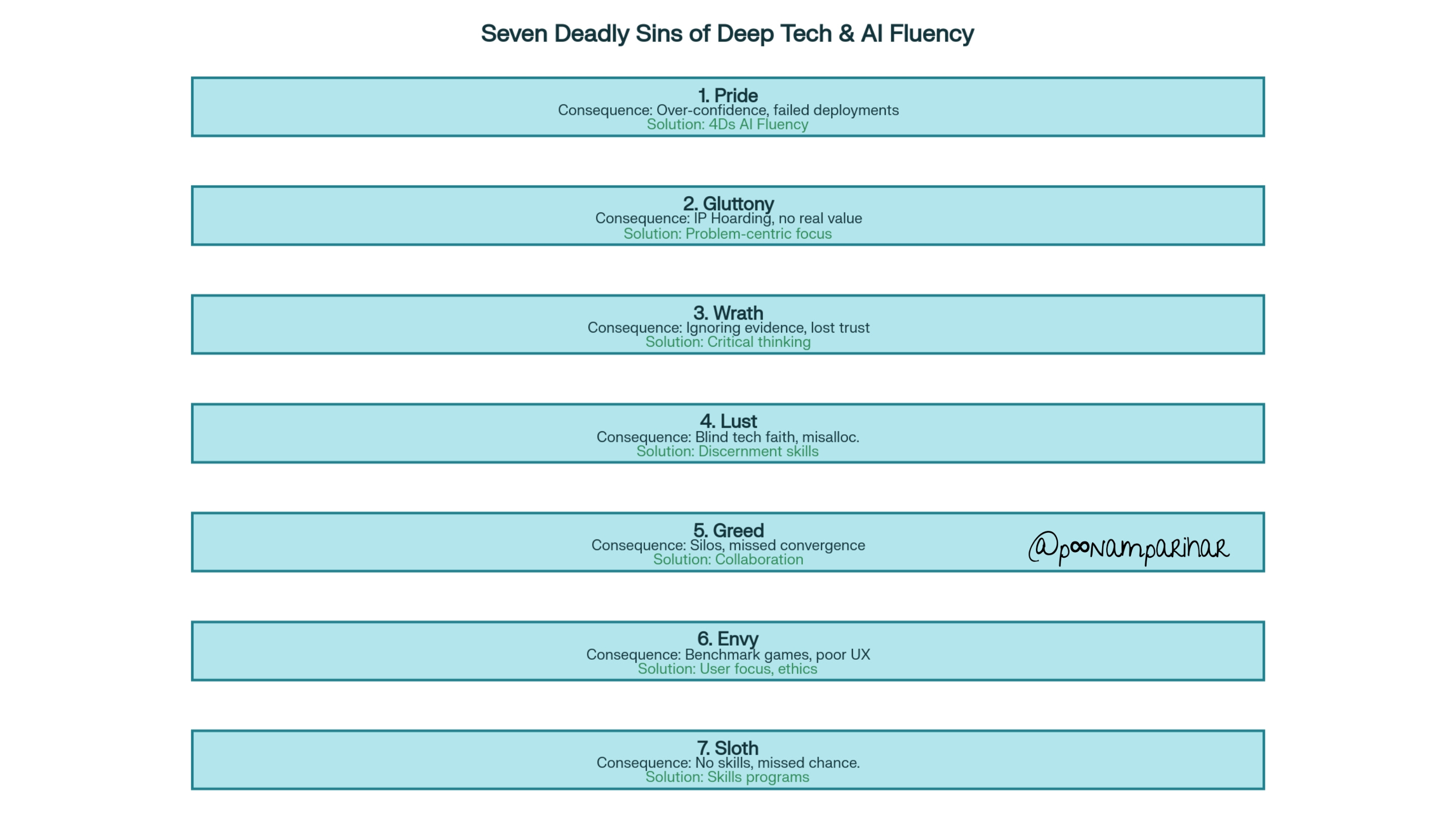
The Seven Deadly Sins Framework: Deep Tech and AI Fluency Edition