
Bringing All AI Models Under One Roof
Microsoft’s Multi-Model move may just simplify AI for Businesses
If you’ve been using AI tools lately, you’ve probably noticed something that almost every AI app / wrapper or vibe coding app now lets you switch between different models.
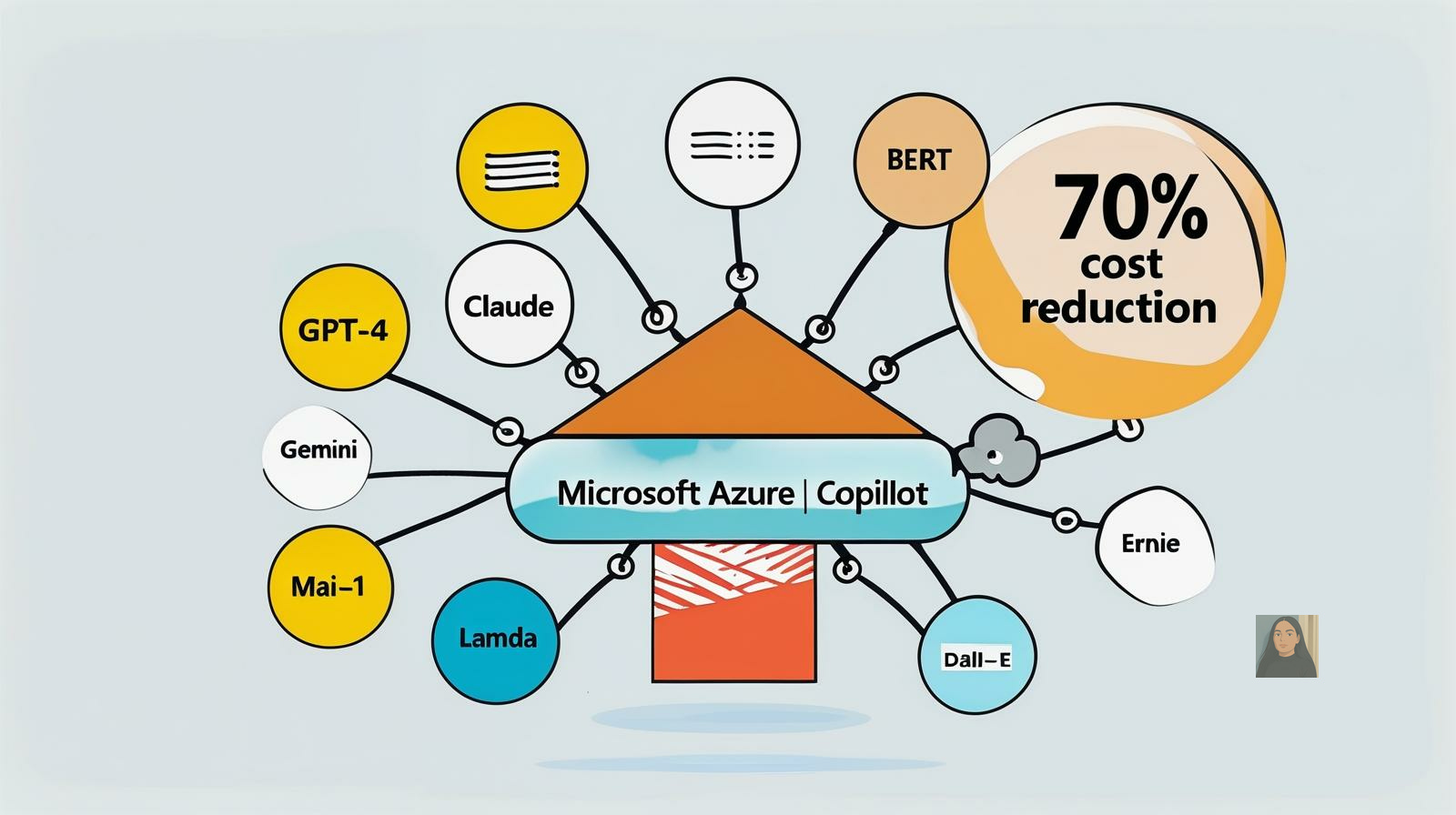
Whether it’s Perplexity letting you choose between Claude, GPT-4, and Gemini for your research, or ChatGPT offering different versions for different tasks, or tools like Poe giving you access to dozens of models with a simple dropdown menu.
model switching has become the norm.
Why the Current User Experience is just a Surface-Level Choice
Here’s what’s actually happening when you switch models in most AI tools today:
When you select “Claude” in Perplexity:
Your question gets sent to Anthropic’s servers
Perplexity pays Anthropic per API call
The response comes back and gets displayed
And That’s it. there is no deeper integration going on there.
Now When you switch to “GPT-4” in the same conversation next:
your question goes to OpenAI’s servers
its a Different API call, with a different pricing structure
The model has no context about your previous Claude conversation
So You’re basically starting fresh each time
So What This Means for You:
You get choice, which is great
But each model operates in isolation
No memory or context sharing between models
You’re essentially using separate AI assistants that happen to live in the same app.
The Limitation? It’s Still Just Model Swapping
Think of current AI tools like having multiple translators in a room who don’t talk to each other. You can ask the French translator a question, then switch to the Spanish translator, but the Spanish translator has no idea what you just discussed in French.
for example, if you’re using Perplexity to research a complex topic:
You start with Claude to analyze a document
Switch to GPT-4 for creative brainstorming
Move to Gemini for data analysis
The Problem: Each model starts from scratch. Model #2 doesn’t know what Model #1 found, and Model #3 can’t build on the insights from Model #2. You’re doing all the integration work manually.
Now Here’s What Microsoft Actually? Likely Did (And now this is next big step in AI powered business transformation journey )
So instead of doing model switching, Microsoft created something fundamentally different. They built a system where multiple AI models can work together as a team, sharing context, coordinating tasks, and building on each other’s work.
Think of it like this—instead of having to negotiate separate deals with every AI company (imagine the paperwork nightmare!), Microsoft is saying: “Hey, just sign one contract with us, and we’ll give you access to all the best AI models on the planet.” It’s like Netflix for AI models, but for enterprises.Beyond Surface-Level Integration: True Multi-Model Orchestration
What Microsoft’s Approach Enables:
Models that can pass information and context to each other
AI agents that specialize in different tasks but collaborate seamlessly
A central orchestration system that decides which model handles which part of a complex request
Persistent memory and context across all model interactions.
Real Example in Action:
You ask Microsoft’s system: “Help me plan a marketing campaign for our new product launch.”
Instead of picking one model and hoping for the best, here’s what actually happens:
Research Agent (Claude) analyzes market trends and competitor data
Creative Agent (GPT-4) develops campaign concepts based on the research
Data Agent (Specialized Model) calculates budget allocations and ROI projections
Compliance Agent (Legal-Focused Model) reviews everything for regulatory issues
Coordination Agent synthesizes all inputs into a comprehensive campaign plan
The key difference: All these agents know what the others are doing and can build on each other’s work.
Why This Changes Everything?
Remember when Apple created the App Store and suddenly you didn’t have to visit individual software company websites to buy apps? That’s exactly what’s happening in AI right now. The era of calling up OpenAI, Anthropic, and Google separately to negotiate AI deals is over.
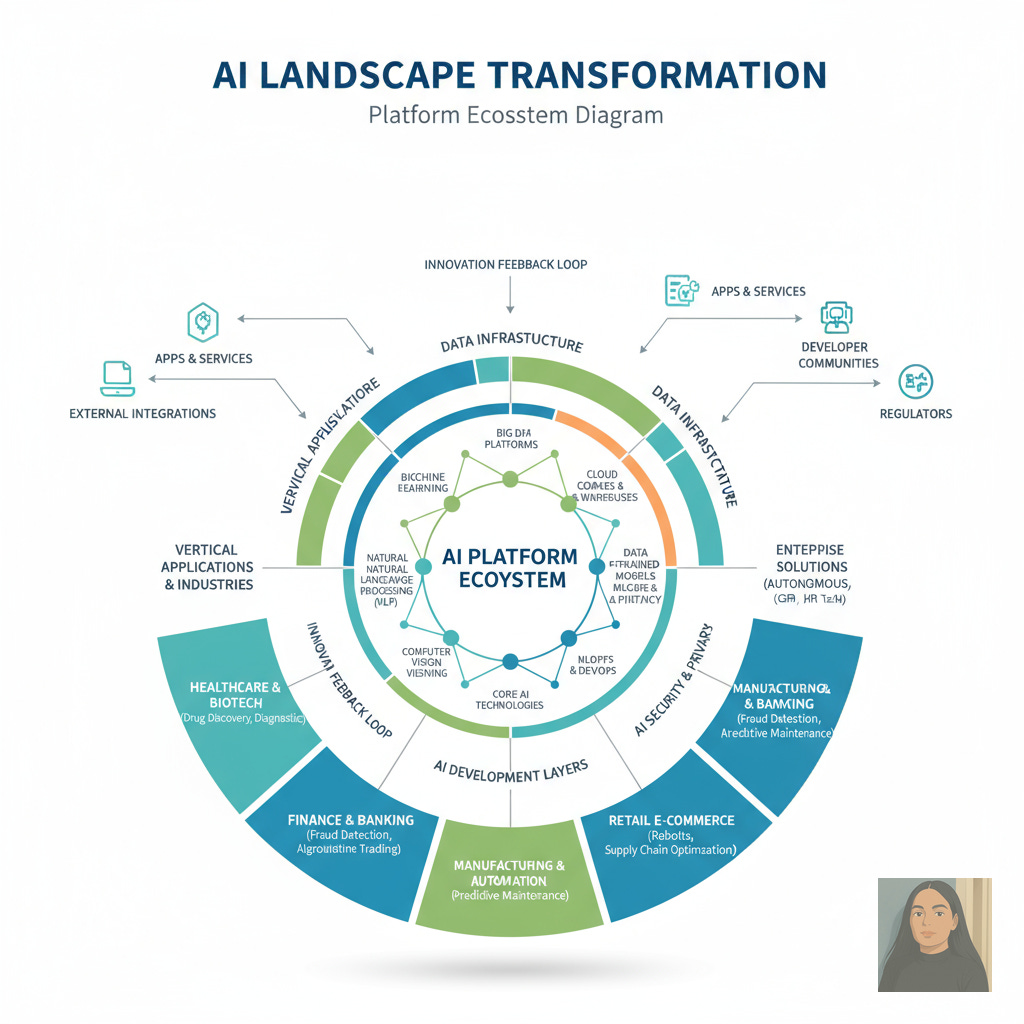
A Strategic Shift From Models to Platforms
Microsoft’s recent move to integrate multiple leading AI models—like OpenAI’s GPT and Anthropic’s Claude—within Copilot and Azure AI Foundry is changing the enterprise AI landscape entirely. Instead of businesses choosing a single “best” model and committing to complex one-on-one contracts, Microsoft now lets companies access many top models through their platform.
Here’s the shift: The focus is moving away from individual AI providers and toward platform ecosystems—Microsoft, Salesforce, AWS, or Google—who orchestrate access, deployment, security, and governance for all models in one unified experience.
What This Actually Means (Let Me Break It Down)
Imagine you’re running a company and you need AI for different tasks. In the old world, here’s what you’d have to do:
The Old Headache Way:
Call OpenAI for GPT-4 access → separate contract, security review, compliance check
Call Anthropic for Claude → another contract, another security review
Call Google for Gemini → yet another contract
Result: Your legal team wants to quit, your IT security team is overwhelmed, and you’re managing 5+ different AI vendors
The New Copilot Way:
Sign one contract with Microsoft
Get access to GPT-4, Claude, Gemini, and Microsoft’s own models
One security review, one compliance framework, one billing system
Result: Your legal team is happy, IT is happy, and you can focus on actually using AI instead of managing contracts
Single LLM vs Multi-Model: The Real Difference (With Examples That Matter)
The Traditional Single LLM Approach
How Most Companies Are Doing It Wrong:
Let’s say you’re running a bank. You sign a big contract with OpenAI for GPT-4. Now, every single customer interaction—from “What’s my balance?” to complex investment advice—gets processed by the same expensive, high-powered model.
for Example: A medium-sized insurance company was spending $75,000/month on GPT-4 because they were using it for everything—including simple questions like policy lookups that could be answered by a much cheaper model.
The Multi-Model Strategy (AKA The Smart Move)
How Smart Companies Are Doing It:
The same insurance company now uses Microsoft’s multi-model approach:
Simple policy questions → Fast, cheap models (saves 80% on costs)
Complex claim analysis → Premium reasoning models
Legal document review → Specialized compliance models
Customer complaints → Models trained for empathy and de-escalation
Result: They cut their AI costs by 65% while actually improving customer satisfaction.
Business Implications and Simplification (Why Your CFO Will Love This)
For enterprises, Microsoft’s approach brings dramatic simplification:
Procurement Becomes Actually Easy
One contract covers access to many models, reducing the need for separate agreements, security reviews, and compliance frameworks
No more vendor management headaches—Microsoft handles all the relationships with AI companies
Risk Gets Outsourced (In a Good Way)
Instead of betting on a single vendor, companies tap into a wider catalog
Microsoft decides which models are best and handles updates, reliability, and compliance
If one AI company has problems, you automatically failover to alternatives
Negotiation Leverage Improves Dramatically
Enterprises can switch models or use the best ones for each task
Better pricing through Microsoft’s bulk purchasing power
AI Labs become suppliers: OpenAI, Anthropic, Cohere shift from direct enterprise sales to supplying models that feed into giant platforms
The Real Choice: Not Which Model, But Which Ecosystem
Here’s the million-dollar question every company needs to answer: Which platform do you want to “marry”?
Your options are:
Microsoft (Azure AI Foundry + Copilot)
Amazon (AWS Bedrock)
Google (Vertex AI)
Salesforce (Einstein Platform)
These platforms become brokers of value, integrating, securing, and governing multiple AI models for their enterprise users. For most companies, this means freedom from vendor lock-in, faster innovation, and way less operational headache.
Risk Outsourcing Dynamics (Why Your CISO Will Sleep Better)
By centralizing AI models within a platform, businesses hand over much of the risk—data security, compliance, content safety, and ongoing evaluation—while retaining the ability to switch models as needed.
Microsoft’s platform gives you:
Strong controls across all AI interactions
Unified policies that work across different models
Auditability that makes compliance teams actually happy
Governance that’s far easier for large organizations to manage
Historical Parallels: We’ve Seen This Movie Before
Microsoft’s approach echoes past shifts in tech that completely changed industries:
The App Store Revolution
Before: You visited individual software company websites, downloaded sketchy installers, managed updates manually
After: Apple created a centralized, trusted marketplace as one place for discovery, downloads, updates, and billing.
The Cloud Platform Revolution
Before: You bought physical servers, managed data centers, hired infrastructure teams
After: AWS turned hardware into scalable, managed APIs and now you just pay for what you use.
The AI Platform Revolution (Happening Now)
Before: Negotiate with each AI company, manage multiple contracts, handle security separately
After: Platforms like Azure become the hub for AI orchestration, discovery, compliance, and monetization
In all these cases, the real value migrated “up the stack” and away from individual suppliers and toward platforms that own customer relationships and set the ground rules.
What This Means for AI Labs vs Platforms (The Power Shift)
AI Labs (OpenAI, Anthropic, etc.):
Still create amazing frontier technology
But now face commoditization as platforms can rapidly list, evaluate, and route alternatives
Their differentiators shift to unique features, specialized compliance, or data integrations
Customer relationships increasingly belong to the platforms
Platforms (Microsoft, AWS, Google):
Gain power by steering demand and enforcing standards
Host the workflows built on their SDKs—not on any single model’s API
Control the customer relationship and billing
Become the new kingmakers in AI
Why Enterprises Must Move to Multi-Model Strategy (The Business Case)
Cost Optimization That Actually Works
Real Enterprise Example:
A major healthcare network was spending $200,000/month on a single AI model for all their needs. After switching to a multi-model approach:
Administrative queries → Lightweight models (90% cost reduction)
Diagnostic assistance → Specialized medical AI
Research tasks → High-reasoning models
Result: 70% total cost reduction with better outcomes across all use cases
Performance Through Specialization
Manufacturing Success Story:
Instead of one model trying to handle everything, a global manufacturer now uses:
Vision AI for quality control on assembly lines
Predictive AI for equipment maintenance forecasting
Language AI for supplier communications and reporting
Result: 40% reduction in defects, 25% decrease in equipment downtime
Risk Management and Business Continuity
The Single Point of Failure Problem:
When ChatGPT went down for a few hours last year, companies that relied solely on OpenAI had their entire AI-powered operations grind to a halt.
Multi-Model Resilience:
Automatic failover between models ensures operations continue
Geographic and technical redundancy protects against outages
Diversified AI supply chain reduces dangerous vendor dependencies
What’s Coming Next: The Future of Multi-Model AI
The Agentic AI Revolution
Microsoft’s roadmap points toward AI agents that work in teams, just like your employees do:
Coming in 2025-2026:
Marketing Team AI: One agent handles social media, another manages email campaigns, a third analyzes customer feedback—all coordinating automatically
Finance Team AI: Agents that handle invoicing, budget analysis, and regulatory reporting working together seamlessly
Operations Team AI: Supply chain agents talking to quality control agents talking to customer service agents
Industry-Specific AI Ecosystems
Healthcare (Already Happening):
Diagnostic AI specialized in radiology
Treatment planning AI trained on clinical outcomes
Administrative AI for insurance and scheduling
All talking to each other through Microsoft’s platform
Financial Services (Rolling Out Now):
Fraud detection AI monitoring transactions
Risk assessment AI analyzing loan applications
Compliance AI ensuring regulatory adherence
Customer service AI handling routine inquiries
The Open Agentic Web
Microsoft envisions a future where AI agents can:
Read and understand any website automatically
Book appointments, make purchases, and handle tasks across the internet
Work together across different companies and platforms
Think of it as AI employees that can work anywhere on the web
Practical Recommendations for Enterprises (Your Action Plan)
Immediate Actions (Next 6 Months):
1. Standardize on Platforms, Not Single Models
Stop negotiating individual AI contracts
Consolidate around governance, evaluation, and orchestration platforms
Retain flexibility to switch models per task
2. Audit Your Current AI Spending
Identify which tasks actually need premium models vs. routine operations
Calculate potential savings from multi-model routing
Most companies can cut AI costs by 40-60% immediately
Medium-Term Strategy (6-18 Months):
3. Institutionalize Evaluation and Routing
Benchmark models continually to select best performers by cost, speed, and quality
Set up automatic routing based on query complexity and sensitivity
Create your own AI “air traffic control” system
4. Build Specialized Agent Teams
Deploy AI agents for different business functions (HR, Finance, Operations)
Start with simple tasks and gradually increase complexity
Focus on agents that work together, not in isolation
Long-Term Vision (18+ Months):
5. Anchor Your Value in Data and Workflows
Invest in proprietary context, retrieval systems, and process logic
Build multi-agent orchestration capabilities
These assets persist even as AI models change
6. Design for Trust and Auditability
Use strong governance frameworks
Implement project-level boundaries and human-in-the-loop approval
Especially critical for sensitive tasks and regulated industries
Conclusion: The Era of Single-Vendor AI Deals Is Over
Microsoft’s multi-model integration signals that platforms will own distribution, governance, and customer touch points. The major question for enterprises is no longer “Which is the best AI model?” but “Which platform will best enable my organization’s AI future?”
As platforms become the brokers, AI labs become commodity suppliers, and businesses stand to benefit from simplicity, safety, and flexibility, provided they choose their ecosystem wisely.
The companies that recognize this shift now and move to platform-based AI strategies will have massive competitive advantages in the next 2-3 years. The ones that don’t? They’ll be stuck managing a mess of individual AI contracts while their competitors are building integrated AI teams that work seamlessly together.


