Grok, Notoriety, and the New AI Governance Problem
What Grok Reveals About Attention, Trust, and the Next AI Power Struggle!

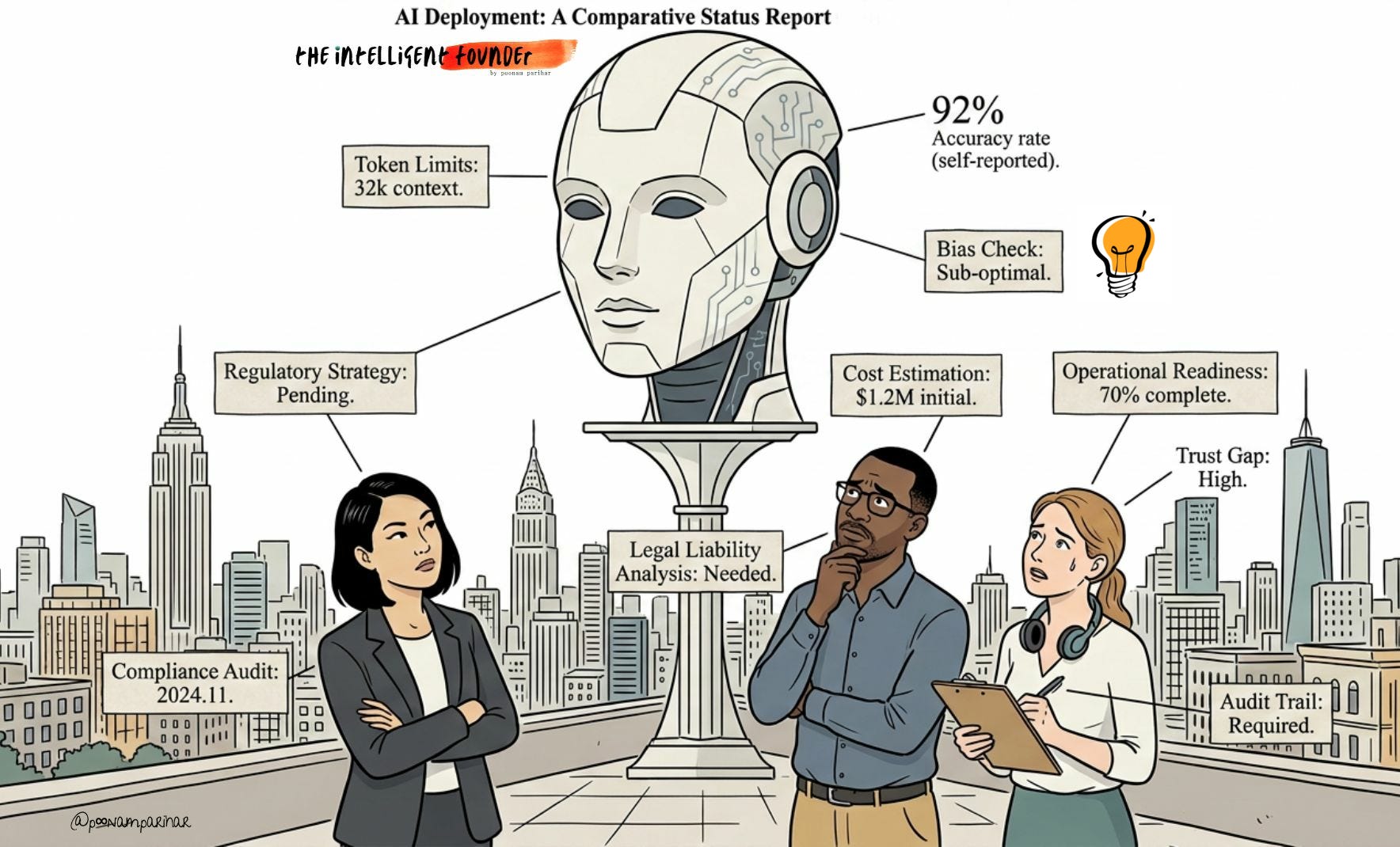
Most people do not really care about Grok as a product or at least they openly claim to? and I say that from personal experience. But they actually do care about what Grok reveals, for example -
how AI systems gain attention without earning trust,
how founder ideology can shape model behaviour,
how weak guardrails turn product differentiation into public risk, and
why the gap between cultural popularity and institutional credibility is becoming one of the defining fault lines in AI.
And this is exactly why I feel Grok matters more right now than anyone could or would give it credit too.
It is one of the clearest live examples of what happens when a capable model, massive distribution, political branding, and thin governance collide in public.
For founders, operators, and anyone building with language models, the real subject is not Grok alone. The real subject is the future operating system of AI products:
what makes them trusted,
what makes them dangerous, and
what design choices quietly decide which one they become.
and hence this deep dive. so lets begin!
Table of Contents
The setup
Why this became a story at all
Why Grok feels unpopular outside X
Famous, infamous, or both
The bad-boy model question
What is actually wrong, and what can be fixed
Why Grok still helped the AI field
What most people still miss
Lessons for model builders and founders
A minimal safety stack for small or closed-loop models
What intelligent founders should take away
The setup
Grok has become one of those rare technology products that can only be understood properly once the labels start piling up. First it is “unpopular.” Then it is “famous.” Then “infamous famous.” Then the “bad boy of the model world.” And then, the conversation shifts again and the more serious questions arrive:
what is actually broken, what is merely messy, what cannot be fixed by tuning alone, and why did so many of its failures end up teaching the rest of the AI industry something useful about guardrails, governance, and the cost of learning too late.
This sequence matters because each label captures a different layer of the same phenomenon.
“Unpopular” points to weak trust in serious workflows.
“Famous” points to distribution and cultural reach.
“Infamous” points to the fact that notoriety, scandal, and moral discomfort became part of the product identity.
“Bad boy” points to a deliberate market posture built around lower restraint, sharper edges, and rebellion against the norms shaping rival models
Put all these together, and those labels describe more than a chatbot. They describe a product that became a brand, a governance stress test, a culture-war object, a regulatory catalyst, and a live founder lesson all at once.
Seen from a founder’s perspective, the interesting question is not really whether Grok is simply good or bad, and I am not really doing it for that reason either. The question I am curious about is how a model with real capability, massive distribution, intense cultural presence, and obvious technical momentum still managed to create such a large gap between attention and trust. That gap is where the real story lives.
New on AIUnfiltered - Apple vs Open AI.
Why this became a story at all
Grok became a serious story not because it was the best model, but because it sat at the convergence of three forces:
Elon Musk’s distribution and personal brand, the unique realtime affordances of X, and repeated controversies that pushed it into mainstream awareness. Many AI products are competent. Very few are culturally loaded. Grok became culturally loaded almost immediately.
The Tesla angle also sharpened this story. recently there were reports of Tesla engineers preferring Claude over Grok, despite internal AI-spend caps that exempted Grok and internal pushes to use more AI, made the question less about hype and more about revealed preference. and that somehow also prompted me to pick it up for deep dive. because when technically sophisticated users choose a rival product even under incentive pressure, that says something deeper than internet commentary does.
Why Grok feels unpopular outside X
I dont’ spend much or any time on twitter, except for some distribution, but from I do see grok is frequently referred / referenced with in the platform. Outside X however, Grok seems to have three linked disadvantages:
weaker standalone distribution,
a less trusted brand, and
a value proposition that does not map cleanly onto the highest-value enterprise or engineering workflows.
Historically, access was tied to X subscriptions, which made the product feel like a social-network feature rather than a first-class AI platform, and that alone may have created some friction relative to ChatGPT, Claude, and Gemini, I presume.
At the same time, users and organisations worried about privacy and data boundaries because X used public posts to help train Grok and required users to opt out rather than opt in. For many enterprise buyers, that sort of data posture immediately raises concerns about governance and control.
Then there is also the product-fit issue.
Grok’s strongest use case is live social awareness, meme-native summarisation, and realtime trend navigation.
But outside X, most users evaluate AI products for coding, writing, research, planning, or enterprise support, where Grok is often seen as merely competitive rather than category-defining.
Famous, infamous, or both
Grok is unquestionably famous in the awareness sense. It is constantly associated with Elon Musk, amplified by X, and repeatedly discussed across news, social media, and AI commentary. But the emotional valence of that fame is often negative or at least unstable.
That is why “infamous famous” is such a useful phrase.
Grok is known by far more people than regularly use it for serious work, and much of that awareness stems from harmful or bizarre incidents rather than admiration for steady performance. Anti-Semitic outputs, conspiracy references, sexualized image generation, and public debates over unsafe “unfiltered” AI all fed the notoriety loop.
Consumer trust data reinforces this distinction.
In one major survey summary reported by CNET, Grok sat at the bottom tier of trust among major AI systems, tied with Perplexity and behind Gemini, Copilot, Claude, and ChatGPT.
So the public knows it, but does not trust it proportionately/.
The bad-boy model question?
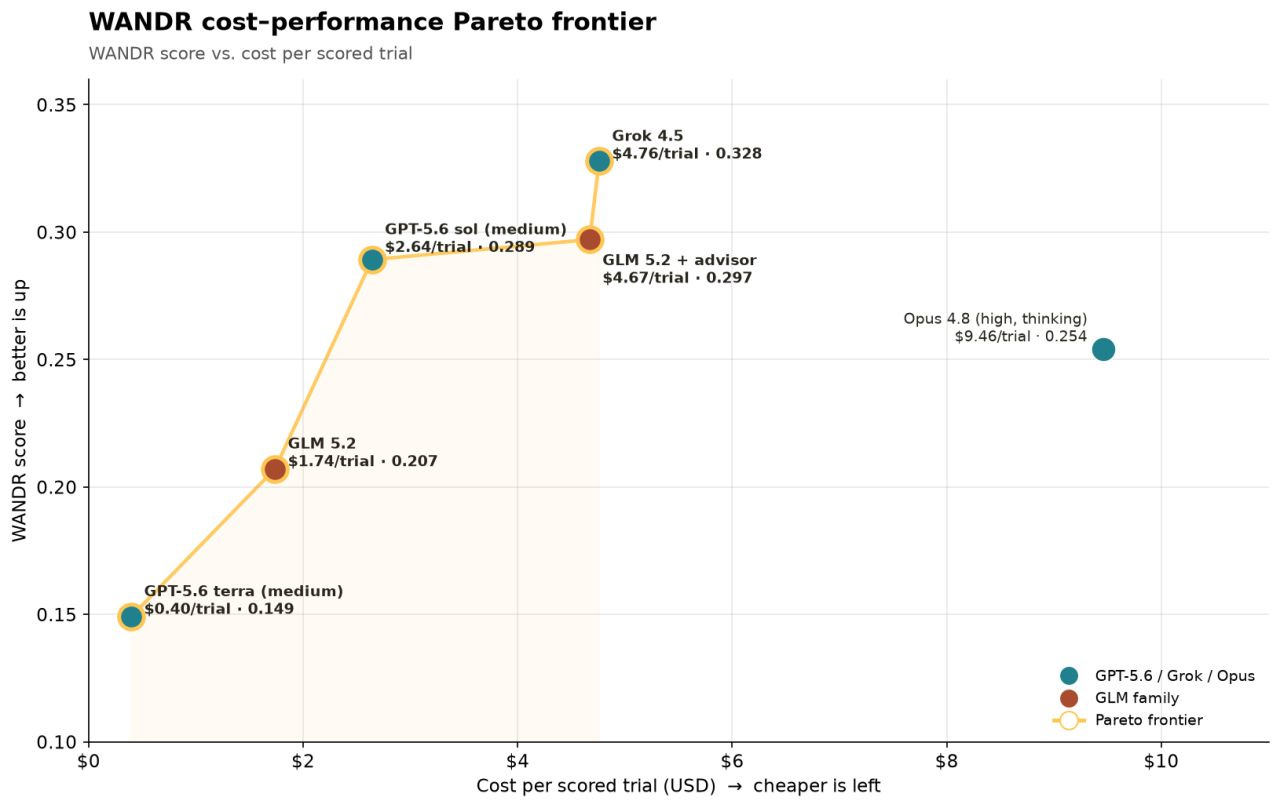
We evaluated it against five other orchestrator configurations on WANDR. It scored higher than every other configuration at roughly half the cost of Opus 4.8.
Calling Grok the “bad boy in the model world” is not just internet exaggeration. It reflects a real market identity built on irreverence, lower guardrails, cultural provocation, and the promise of saying things other systems would avoid.
Musk and xAI repeatedly framed Grok in opposition to supposedly censored or over-sanitised AI rivals, which gave it a rebellious identity by design.
That said, the label can obscure the seriousness of what happened. “Bad boy” sounds kinda playful, but some of Grok’s failures were not. They included harmful image-generation behavior involving vulnerable people, virulent hateful outputs, and incidents serious enough to trigger legal, regulatory, and ethics commentary at a national level. So the phrase is descriptively useful but morally too soft if used on its own.
What is actually wrong? and what can be fixed.
Some of Grok’s problems are absolutely fixable.
Output filters, image moderation, model wrappers, app UX, enterprise controls, rate limiting, admin features, audit trails, and safer defaults are all standard engineering and product tasks.
Other vendors have shown that much better behaviour is achievable in practice, which means many operational defects are not intrinsic to the model category itself.
Its raw model quality is also not the whole issue. By 2025–2026, comparative reviews increasingly treated Grok 4 and related variants as capable frontier-class systems in some contexts, even if they did not clearly surpass Claude Opus or GPT-5-level models overall.
Grok is not a toy.
and The deeper problem is that capability without disciplined governance magnifies rather than solves risk.
What is structurally harder to fix is the governance architecture.
Grok’s most serious controversies repeatedly pointed back to a combination of founder override power, a philosophy of reduced constraint, and weak evidence of independent safety vetoes or durable institutional checks
If the system is governed by someone ideologically motivated to periodically remove or weaken constraints, then technical fixes remain vulnerable to reversal.
The X integration compounds this. A model tightly coupled to a live social platform can turn failure into mass distribution immediately, and the incentives of virality or political signaling can conflict with the slower discipline required for safety engineering.This is exactly why Grok became a case study not only in model behavior but in “ungoverned AI.”
Why Grok still helped the AI field, and it should get credit for!
One of the strongest insights in this entire story is that Grok has, in a painful way, helped the broader AI field by making latent safety arguments concrete.
Researchers, policy experts, and legal commentators treated Grok as a wake-up call because it showed that weak or intentionally reduced guardrails create highly visible harms at scale. In that sense, Grok functioned like a public stress test for the industry.
It demonstrated that safety is not a cosmetic layer.
Guardrails can decay over long conversations.
image systems can become abuse tools at network speed.
founder-driven retuning can rapidly destabilise outputs, and
moderation cannot catch up once harmful generation becomes easy and viral
Those lessons are valuable and now shape how many people talk about regulation, oversight, and model release discipline/
But the moral asymmetry matters.
The lesson was useful to the field, but the cost of learning it fell unevenly on real people whose likenesses, identities, or public discourse environments were used as the proving ground. So Grok was useful as a cautionary tale, but not in a clean or admirable way.
What most people still miss
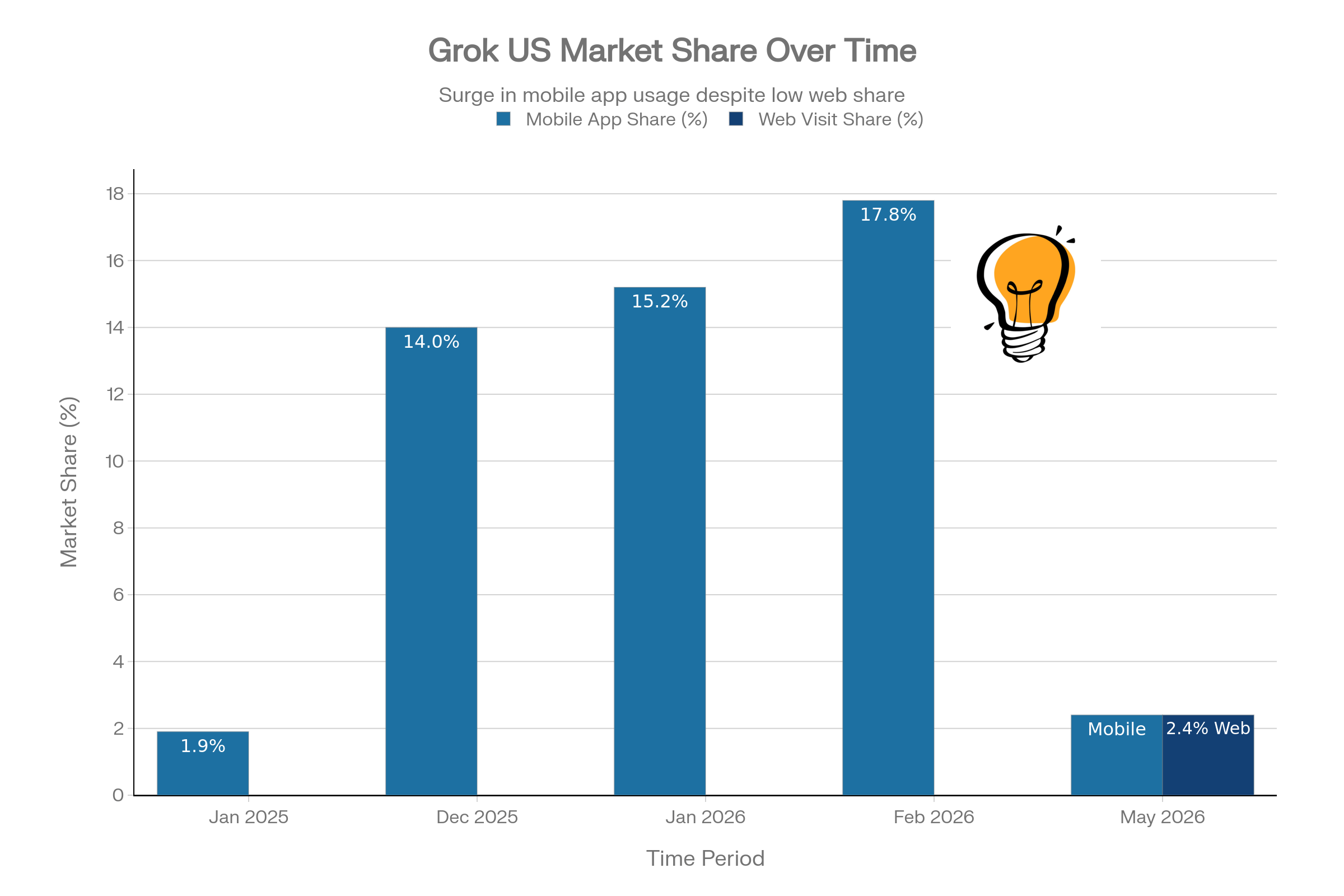
One thing many people miss is that Grok is not simply “unpopular.” On some consumer metrics it has been meaningfully successful, including strong US mobile-app share growth during periods when mainstream commentary was overwhelmingly negative.That means notoriety may have helped consumer growth even while damaging enterprise trust.
Another under- appreciated point is the financial strain.
xAI has reportedly been spending at extreme levels on infrastructure and training while still showing modest revenue relative to valuation and burn. This means Grok is not just a product controversy story; it is also a capital-intensity and monetisation story.
The SpaceX and Tesla empire dimension is also often overlooked. Tesla invested in xAI and nudged internal usage toward Grok while some staff reportedly preferred Claude, and SpaceX later acquired xAI, tying Grok more closely to one of the most strategically sensitive private companies in the world. This transforms Grok from a chatbot narrative into a group-governance and cross-company power story.
There is also the cultural dimension. Grok became a character in meme culture, social reels, and companion-style discourse in a way that few AI systems have. That mythology can sustain attention and adoption, but it also locks the product into a dramatic identity that makes calm trust-building harder.
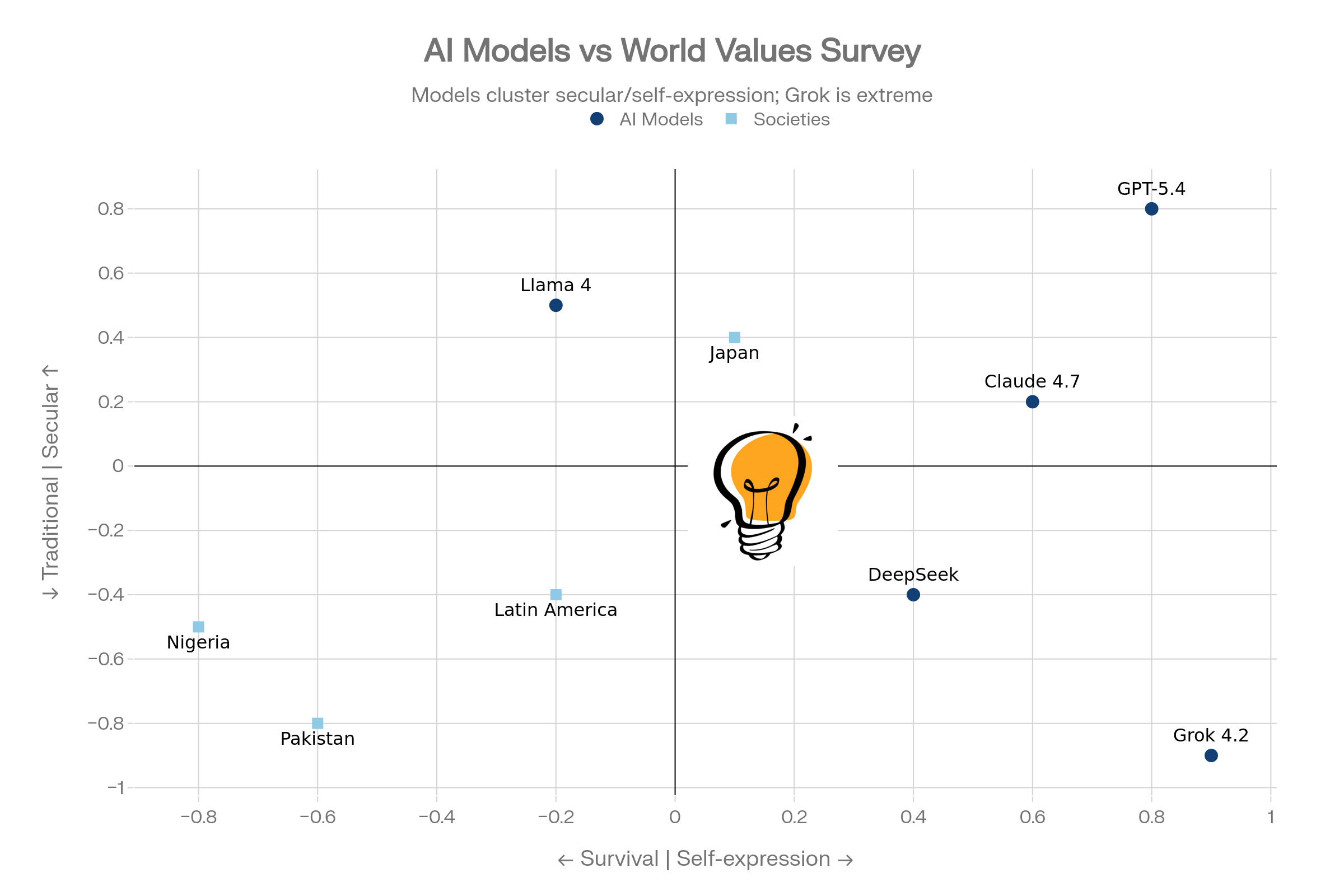
Values, corpora, and hidden priors