



AI has moved beyond chat. The agents can touch databases, move money, trigger workflows and operate inside real businesses. so the question is changed from
How smart is the model?
to:
Who gave agent access? What is it allowed to do? Can we see its decisions? And can we shut it down?
The real fight is now over the action layer. The action layer is the control plane between an AI system’s decision and its ability to affect a real system - tools, permissions, identities, approvals, logs and revocation and The prize is compressed operational latency which means? fewer handoffs, faster diagnosis and workflows that keep moving without waiting for a person.
As agents move from demos into critical workflows, security becomes product infrastructure. Prompt-injection attacks are rising, NIST is moving towards agent standards, and identity, permissions, interoperability and auditability are becoming the new control plane. Open-source frameworks such as OpenClaw are also accelerating access. But they also sharpen the central tension of 2026.
but how do we make agents easy to deploy without making autonomous access dangerously easy to exploit?
The action layer is where AI creates value.
Governance is what makes that value deployable. But “governance” is not a policy document bolted on after launch. It is a technical stack. - agent identity, scoped permissions, secure tool access, runtime monitoring, audit trails and a reliable kill switch. In this deep dive, we will unpack that stack, why NIST and enterprise security teams are converging on it, where open-source agents change the risk equation, and what founders need to build now if they want agents to operate in high-trust environments.
table of contents
Why This Suddenly Matters? The market shift, rising exposure and NIST’s response
The Roadmap in Simple Language - The four layers of the agent stack
OpenClaw as the Provocation, Not the Point - Why open, persistent agents expose the governance gap
The Security Bill Is Already Being Written - Prompt injection, integrations and the emerging agent supply chain
What This Means for Real Operatons.
A Practical Deployment Ladder - From observation to constrained autonomy
The Five Questions Before Production - Identity, authority, evidence and revocation
The Roadmap for the Rest of 2026 - Standards, incidents and the shift in defensibility
What determines whether an agent can be trusted to act
1. Why This Suddenly Matters?
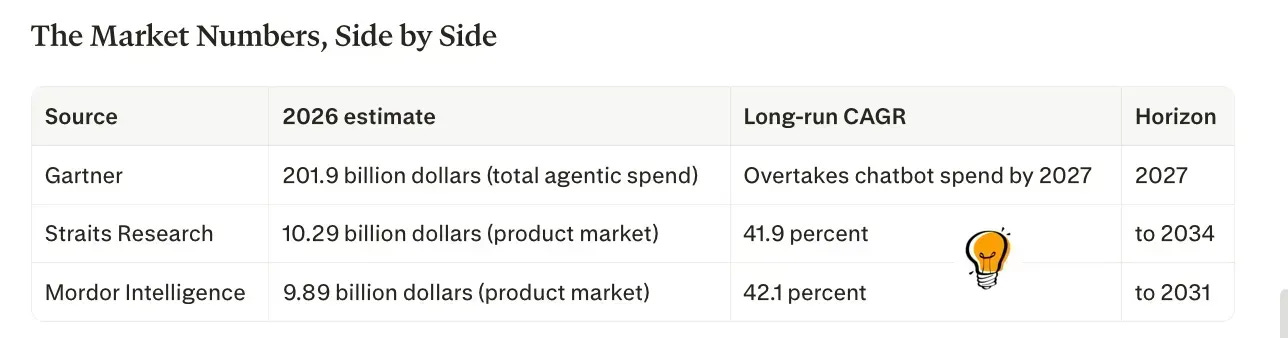
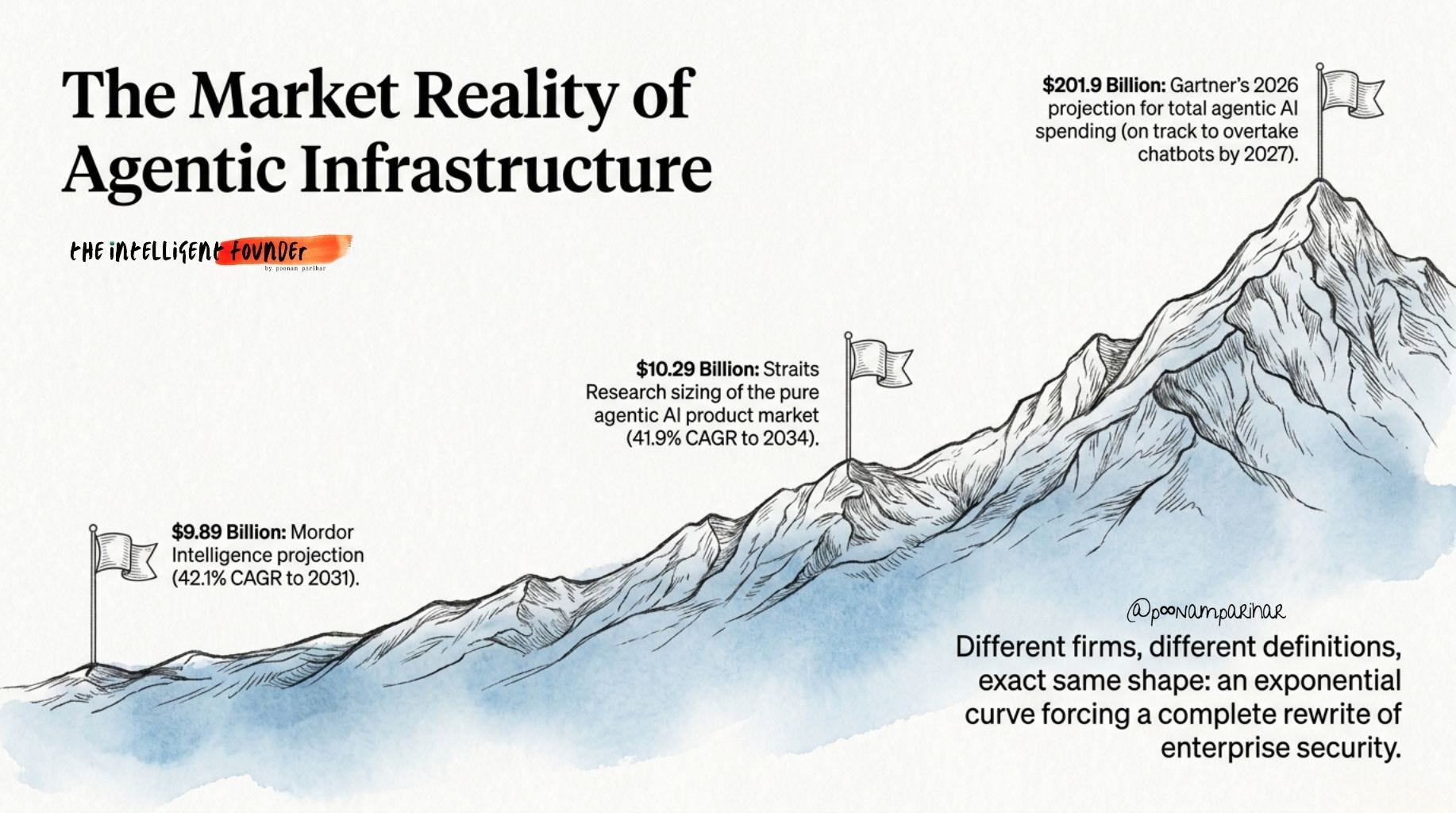
Following three numbers would tell you that the scale shift has happened pretty fast. Gartner puts total agentic AI spending, counting agentic capability embedded across enterprise software, at 201.9 billion dollars in 2026, on track to overtake chatbot spending by 2027. Straits Research sizes the narrower agentic AI product market at 10.29 billion dollars in 2026, growing at a 41.9 percent CAGR through 2034. Mordor Intelligence lands close by, at 9.89 billion dollars in 2026 with 42.1 percent CAGR to 2031. Different firms, different definitions, same shape. its an exponential curve, not a linear one.
This growth curve is exactly why NIST moved, and the scale of it along with the risk profile is what explains it.
On February 17, 2026, the Center for AI Standards and Innovation launched the AI Agent Standards Initiative - the first US government programme built specifically around agent interoperability and security, distinct from earlier general AI safety executive orders. It rests on three pillars:
industry-led international standards leadership,
community-led open-source protocol development, and
hard research into agent identity ie the problem of proving an agent is who it claims to be, and confirming it is only doing what it was actually authorised to do.
That third pillar is the one worth sitting with. It is not abstract governance language. NIST’s National Cybersecurity Center of Excellence published a concept paper (You can download the paper here - ) in February proposing to extend existing enterprise identity tools - OAuth 2.0, OpenID Connect, SPIFFE/SPIRE, SCIM, NGAC - to cover AI agents rather than inventing an entirely new security stack from scratch. In plain terms the lesson here is?
don’t build a new lock for the new kind of key.
Adapt the strongest locks you already trust, and teach them to recognize a non-human actor.
2. The four layers of the Agent stack
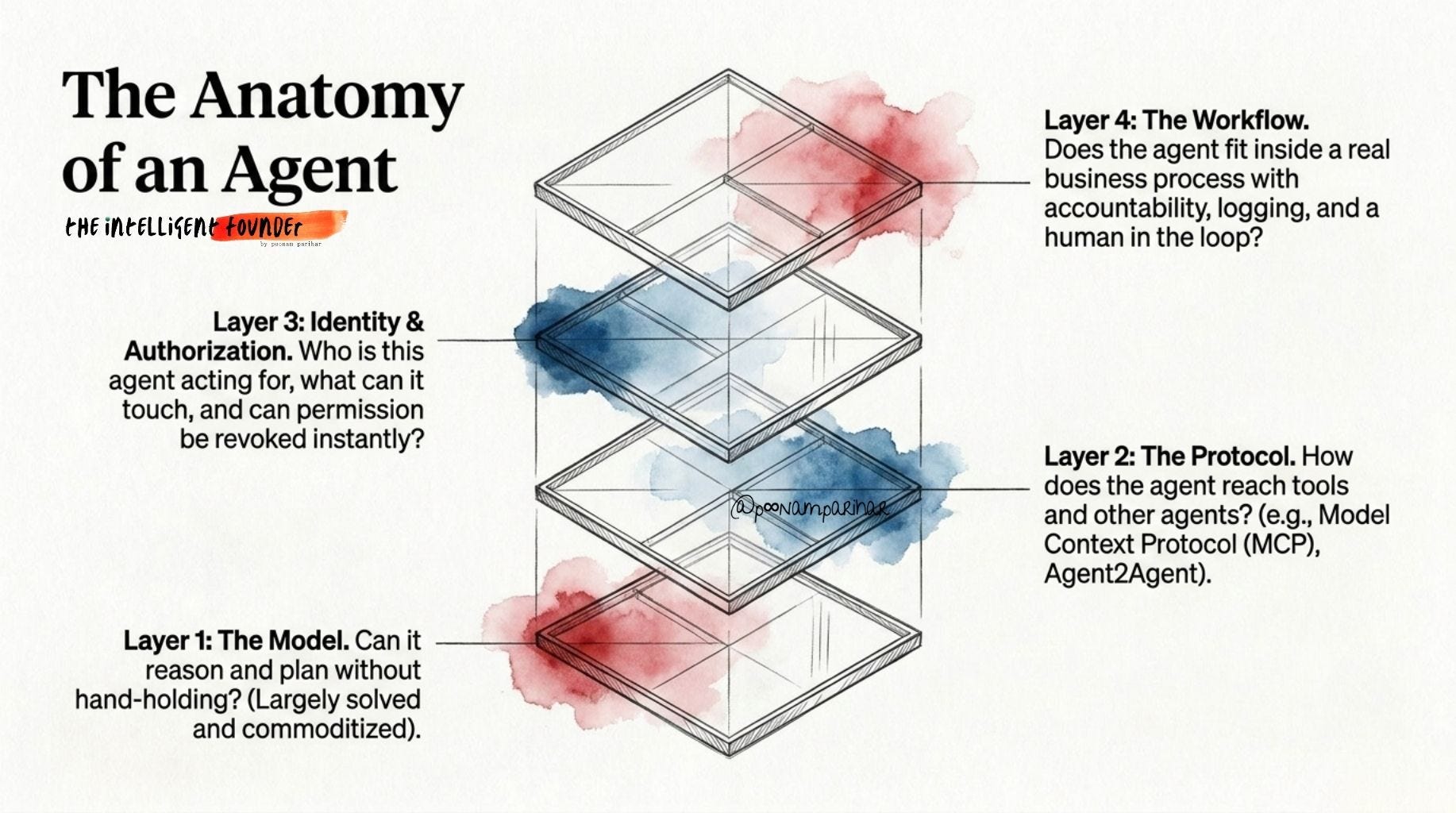
Think of the agent stack as four layers stacking on top of each other. Each layer answers a different question, and each has a different owner right now.
Layer 1 - The model.
Can it reason and plan well enough to be useful without constant hand-holding? Layer 1 is improving rapidly and becoming cheaper for many general-purpose tasks. It is also the most commoditized layer, which is exactly why it gets the least interesting news coverage relative to how much attention it receives.
Layer 2 - The protocol.
How does the agent reach tools, files, and other agents? Model Context Protocol standardizes agent-to-tool connections; Agent2Agent is built for agent-to-agent discovery and delegation. This is where 2026’s real engineering energy is going, because it is the plumbing every other layer depends on.
Layer 3 - Identity and authorization.
Who is this agent acting for, what is it allowed to touch, and can that permission be revoked instantly? This is the layer NIST is racing to standardize, because it is currently the industry’s biggest blind spot, and the layer where almost every documented failure so far has actually occurred.
Layer 4 - The workflow.
Does the agent actually fit inside a real business process with accountability, logging, and a human able to intervene? This is where enterprise value gets captured, and it’s the layer founders should be building for, because it is the hardest to copy.
Most of the noisy 2026 news about new agent frameworks, new benchmarks, viral open-source releases lives at Layer 1 and Layer 2. Most of the real money and the real risk live at Layer 3 and Layer 4.
A simple test for any agent pitch, including your own -
which layer is the actual innovation in, and which layer is being quietly borrowed or ignored?
3. OpenClaw as the Provocation, Not the Point
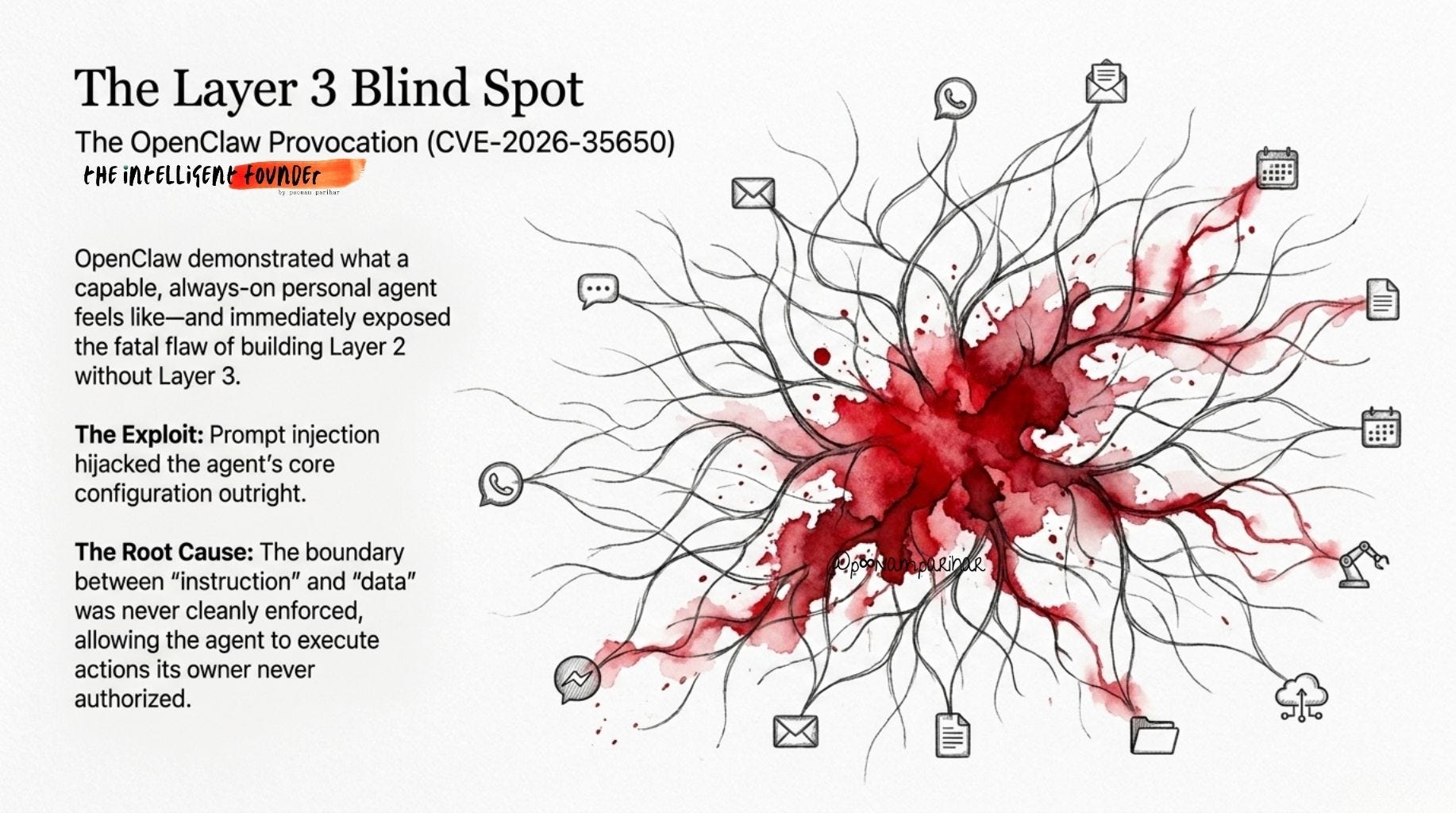
OpenClaw is the loudest example of Layer 2 built for individuals rather than enterprises: a free, open-source agent framework that can run persistently, connect to messaging apps, and automate tasks locally. It captured attention fast precisely because it demonstrated what a capable, always-on personal agent actually feels like. - no waiting for a prompt, no closing the tab, just an agent that keeps working in the background of your life. If Layers 1 and 2 make agents capable and connected, OpenClaw shows what happens when those capabilities reach users before Layer 3 controls mature.
