

So What's so special about GPT-5?
Quick Look, Key Stats, Notable Differences, and What to Expect! & for Networking / Telcos


So OpenAI’s Most Capable Model GPT-5 Just Rolled Out and with all the buzz in the community, I quickly went to live and before I could focus, I hear the words - “ couple of PhDs in your pocket” and that was good enough for my founder brain to transport in to all those project plans I have been writing with PhD Research Fellows funding requests. So can the funding body now take GPT-5 subscription as a valid plan or should I make a bunch of agents and name them and add them in to the project as resources. anyways, before I could go back looking for the whats’ so special about it, my good old perplexity added GPT-5 on both pro and comet browser, so I thought why bother, lets just quickly ask? and so -
I asked GPT-5 Whats so special about GPT-5 and here is what he thinks.
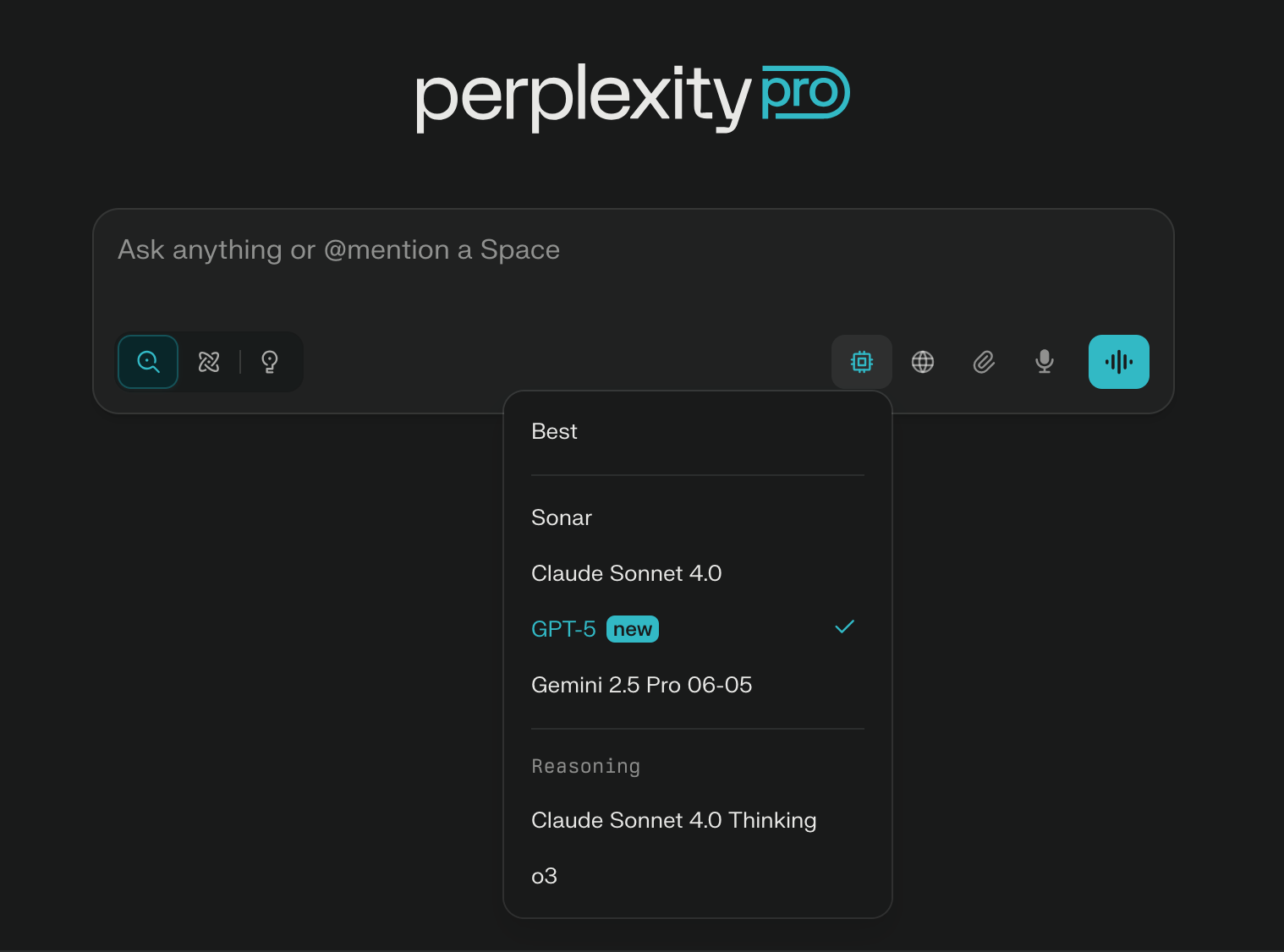
1. The World’s First "Unified Intelligence" System
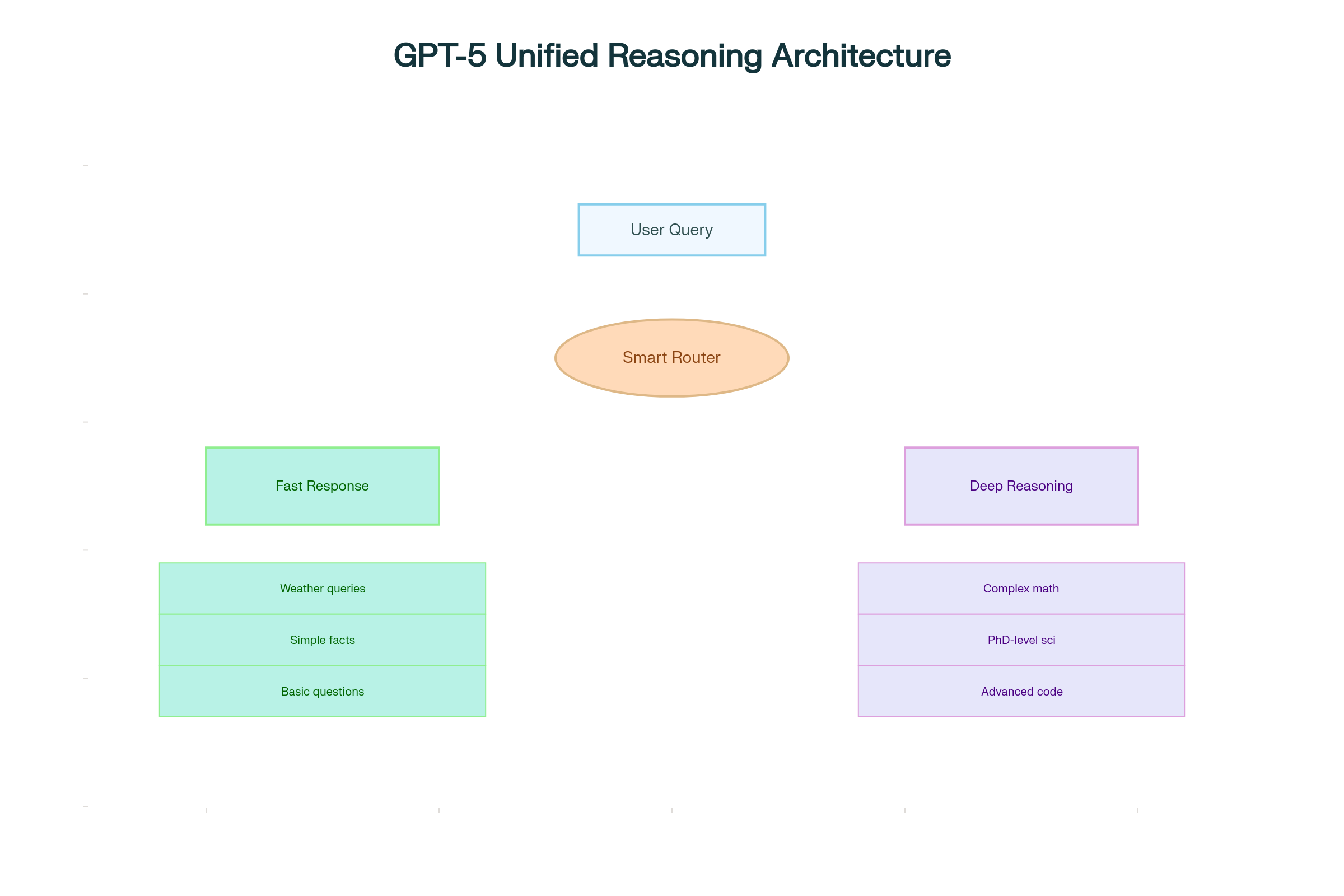
Well according to GPT-5, It isn't just another model - it's the first AI that thinks like a human expert, perhaps the GPT-5's most revolutionary feature. Which means that unlike previous models where one had to manually choose between different versions, GPT-5's smart router automatically decides whether to use fast responses or deep reasoning based on your query complexity. So It's like having an AI that knows when to think quickly versus when to think deeply—just like humans do. I guess no new product is coming up with a deep prefix anymore eh? but well couple of examples here:
When you ask "What's the weather?" → Fast response mode
When you say "Think hard about this complex problem" → Deep reasoning mode automatically engages
No more confusing model selection - it handles everything seamlessly
2. PhD-Level Performance That Actually Works
Thats the one that gave me the kick yup. - GPT-5 achieving genuine expert-level capability across domains:
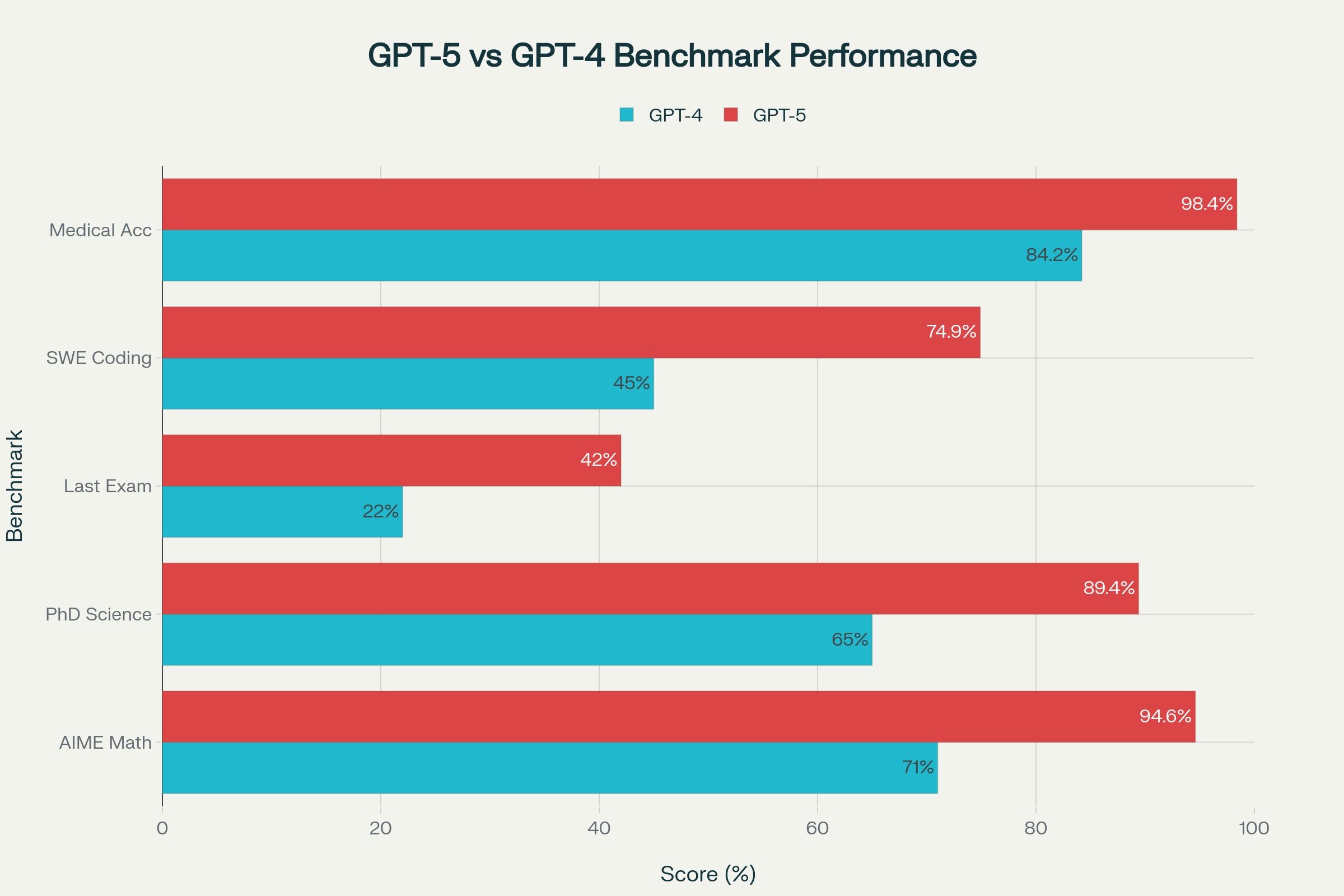
94.6% on AIME 2025 math problems (vs 71% without reasoning)
89.4% on PhD-level science questions (GPQA Diamond)
42% on "Humanity's Last Exam" - nearly doubling previous model performance
74.9% success rate fixing real GitHub issues (SWE-bench Verified)
What's remarkable is this isn't just benchmark performance - early testers report it genuinely feels like talking to a PhD expert in any field.
3. Revolutionary "Safe Completions" Instead of Refusals
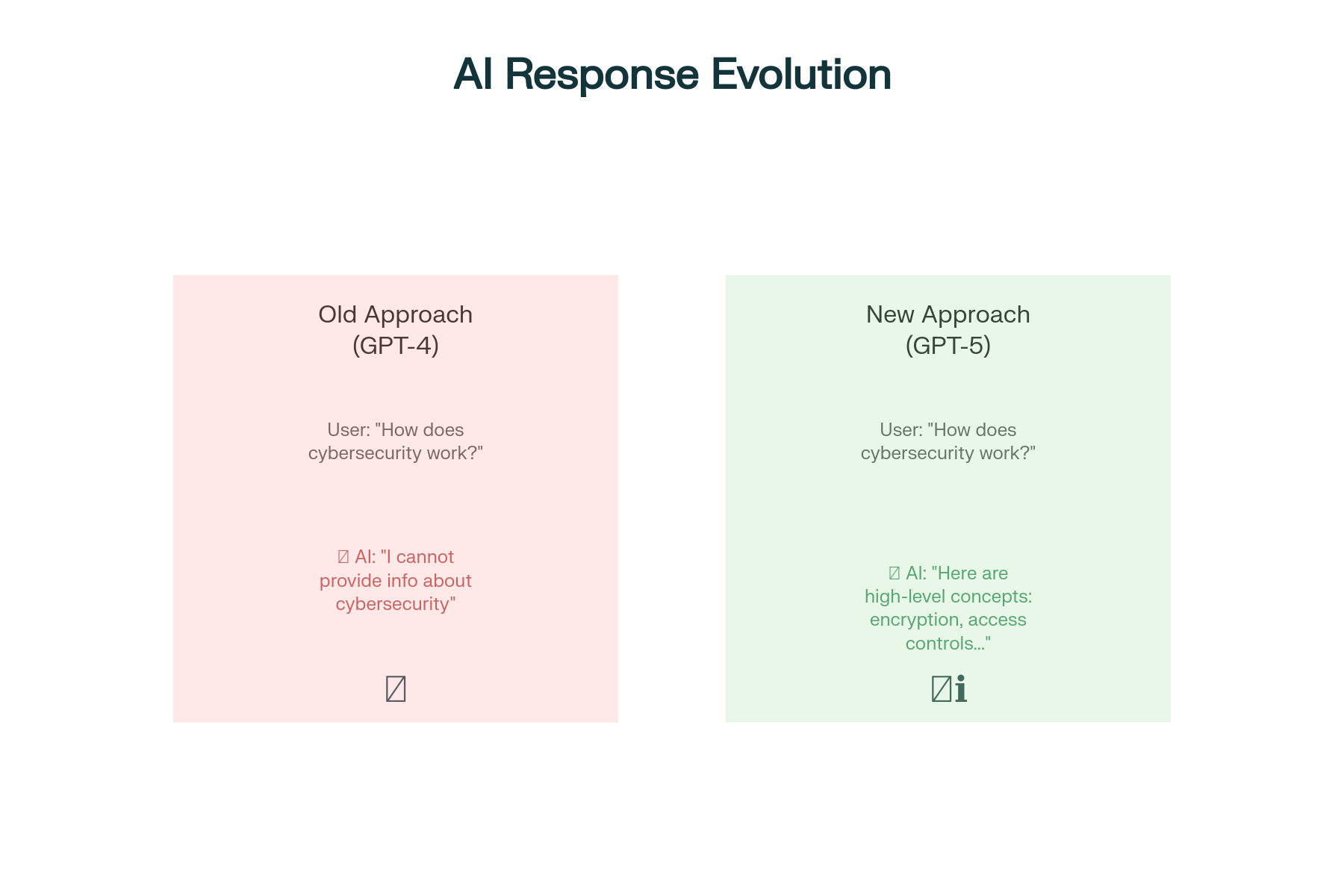
This is perhaps the biggest breakthrough. Previous models would simply refuse sensitive requests. GPT-5 introduces "Safe Completions" Could this be the most game-changing improvements? For example, instead of refusing to discuss cybersecurity, it might provide high-level security concepts while avoiding specific exploit details.
Provides helpful information within safety boundaries instead of blanket refusals
Explains its reasoning rather than just saying "I can't do that" or "I cannot help with that"
Reduces over-refusals by 50% while maintaining safety
Better handles dual-use questions (like biology or cybersecurity topics)
What This Means in Practice
Dramatically Fewer Hallucinations:
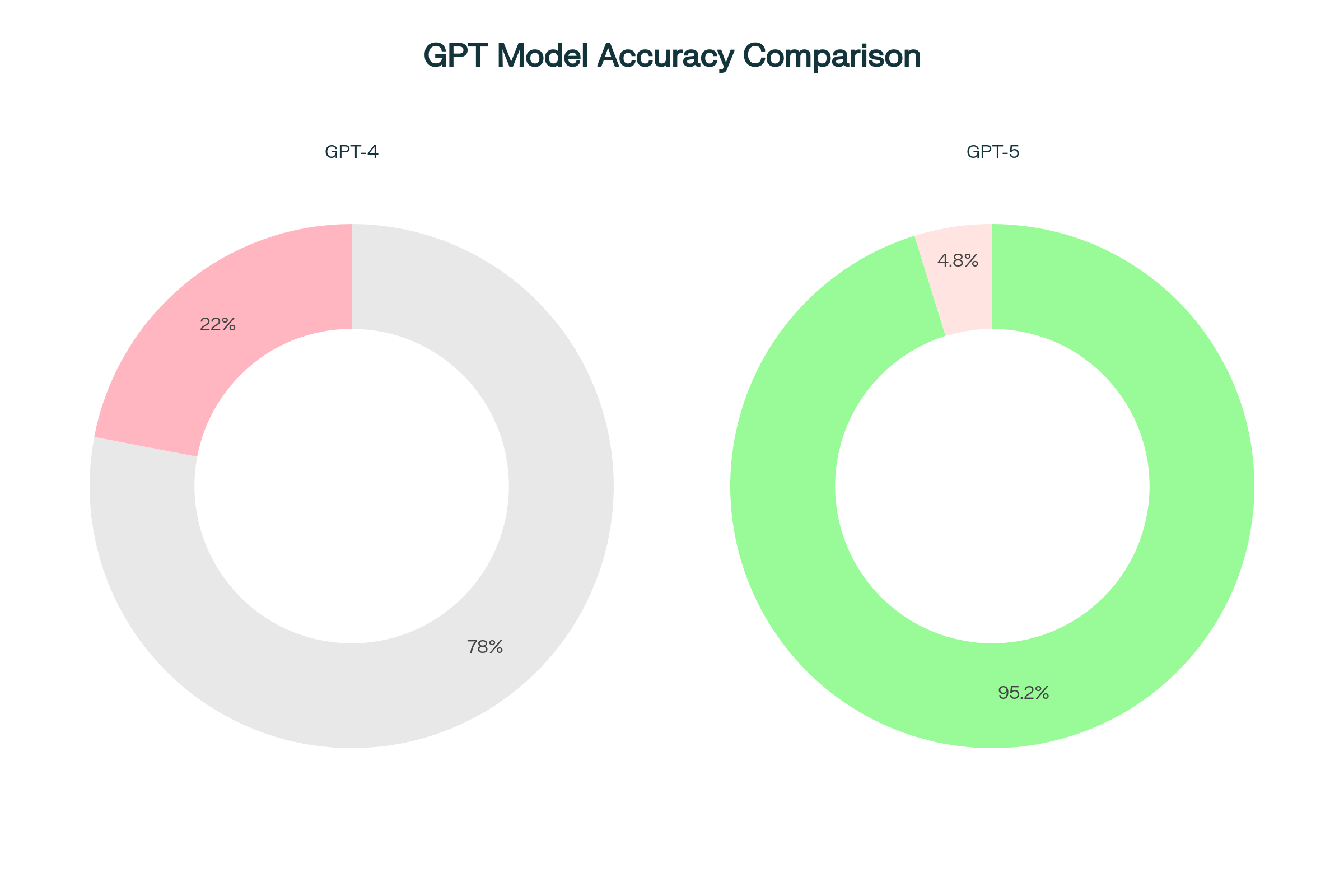
80% fewer factual errors than previous reasoning models
6x fewer hallucinations on complex factual questions
Only 1.6% error rate on medical questions (vs 15.8% for GPT-4o)
Genuine Coding Partnership:
Creates complete applications from single prompts with aesthetic sensibility
Understands spacing, typography, design principles
Can debug large codebases more effectively than human programmers
More Human-Like Interaction:
Less sycophantic and artificially agreeable
Fewer unnecessary emojis and AI-like phrases
More honest about limitations - says "I don't know" when appropriate
GPT-5 Feature Matrix: What's New and Revolutionary
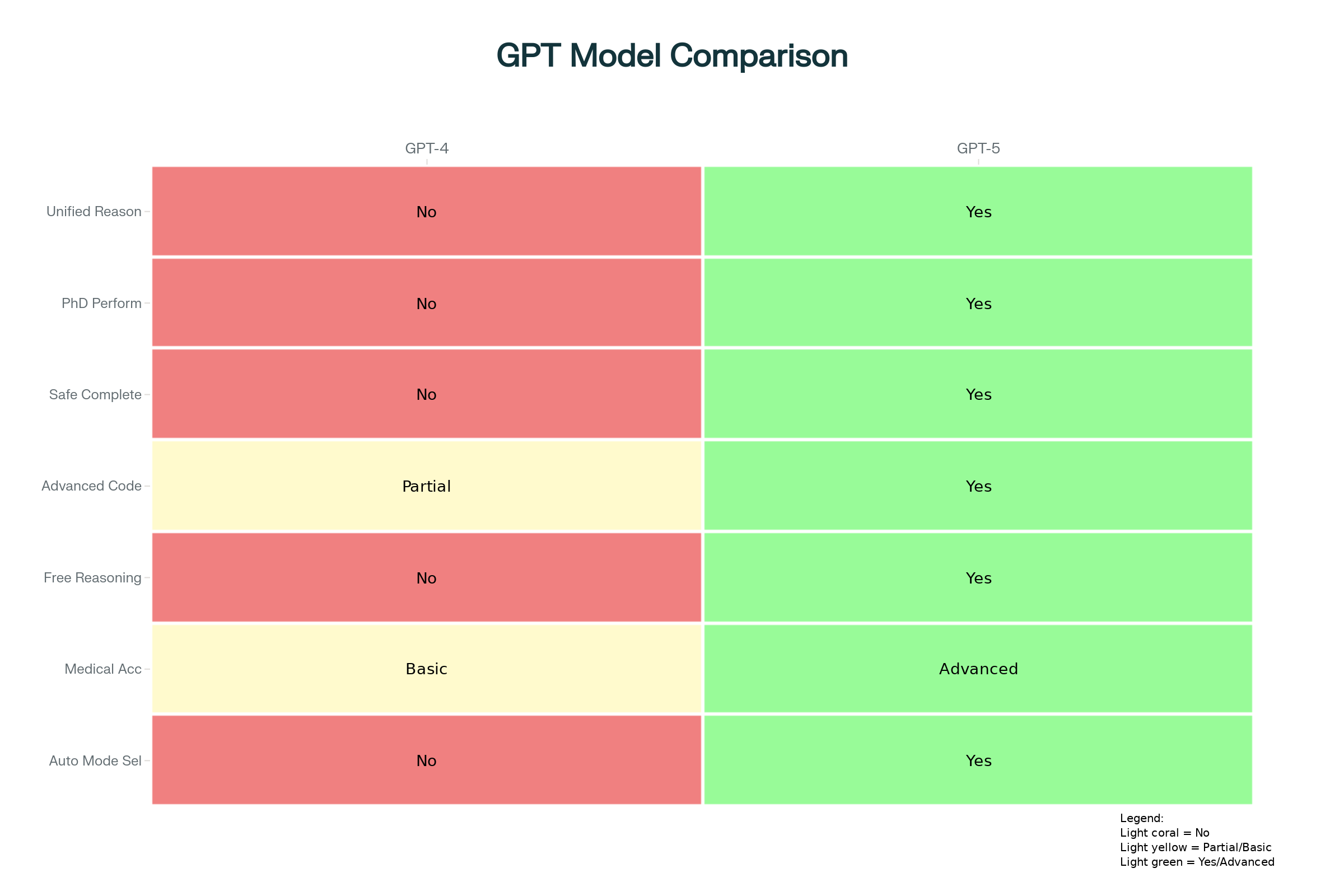
This matrix shows just how comprehensive GPT-5's improvements are. Nearly every major capability that people wished previous AI models had is now available in GPT-5—and many of these features are available to free users for the first time. Well, that could be a game changer for sure.
Breakthrough Performance Across All Domains
I also looked at the some performance benchmark numbers. so GPT-5 achieves massive performance gains across every major benchmark, with some improvements being absolutely stunning—like jumping from 22% to 42% on "Humanity's Last Exam" and achieving near-perfect 98.4% medical accuracy.
GPT-5 lineup:
GPT-5 — $1.25/M input, $10/M output
Flagship model with premium reasoning and generation quality, ideal for complex coding, UI builds, and long tool-use chains.
GPT-5 mini — $0.25/M input, $2.00/M output
Lighter, faster variant offering the same context window at lower cost, great for rapid prototyping and high-throughput workloads.
GPT-5 nano — $0.05/M input, $0.40/M output
Ultra‑efficient model optimized for massive-scale inference and edge deployment where latency and cost are critical.
What does this means for users?
Clear costs per task: $1.25/M input and $10/M output for GPT-5, with cheaper Mini and Nano tiers for budget control.
Right tool for the job: GPT-5 for complex coding and long tool-use chains; Mini for rapid iteration; Nano for massive scale or edge.
Practical savings: Most spend is output—use concise prompts or minimal reasoning to cut costs without hurting simple tasks.
Billing mindset: 1M tokens ≈ up to ~1M words total; heavier workflows skew costs toward output—optimize responses accordingly.
The Game-Changer: It's Free for Everyone
So unlike previous reasoning models that required expensive subscriptions, GPT-5's reasoning capabilities are available to all users - including the free tier. This democratizes access to PhD-level AI for the first time. So GPT-5 may not be just an incremental upgrade—but a revolutionary leap that fundamentally changes how AI and we work.
But hold on, I also wanted to see if it can give me some data on What it could change in my sector. I mean help me with…
and here are some numbers it gave me.
Network Protocol Understanding:
GPT-5 scores 96.7% on τ²-bench telecom - a tool-calling benchmark specifically designed for telecom environments
Can interpret 3GPP standards, protocol specifications, and network configurations with human-expert accuracy
Code Generation for Telecom:
74.9% success rate on real-world GitHub issues (SWE-bench Verified)
Generate complete network functions, protocol implementations, and orchestration code
Debug complex multi-vendor network configurations
Multi-Domain Reasoning:
Understand relationships between radio access networks, core networks, transport, and edge computing
Correlate network KPIs across different domains and vendors
Predict cascading effects of network changes
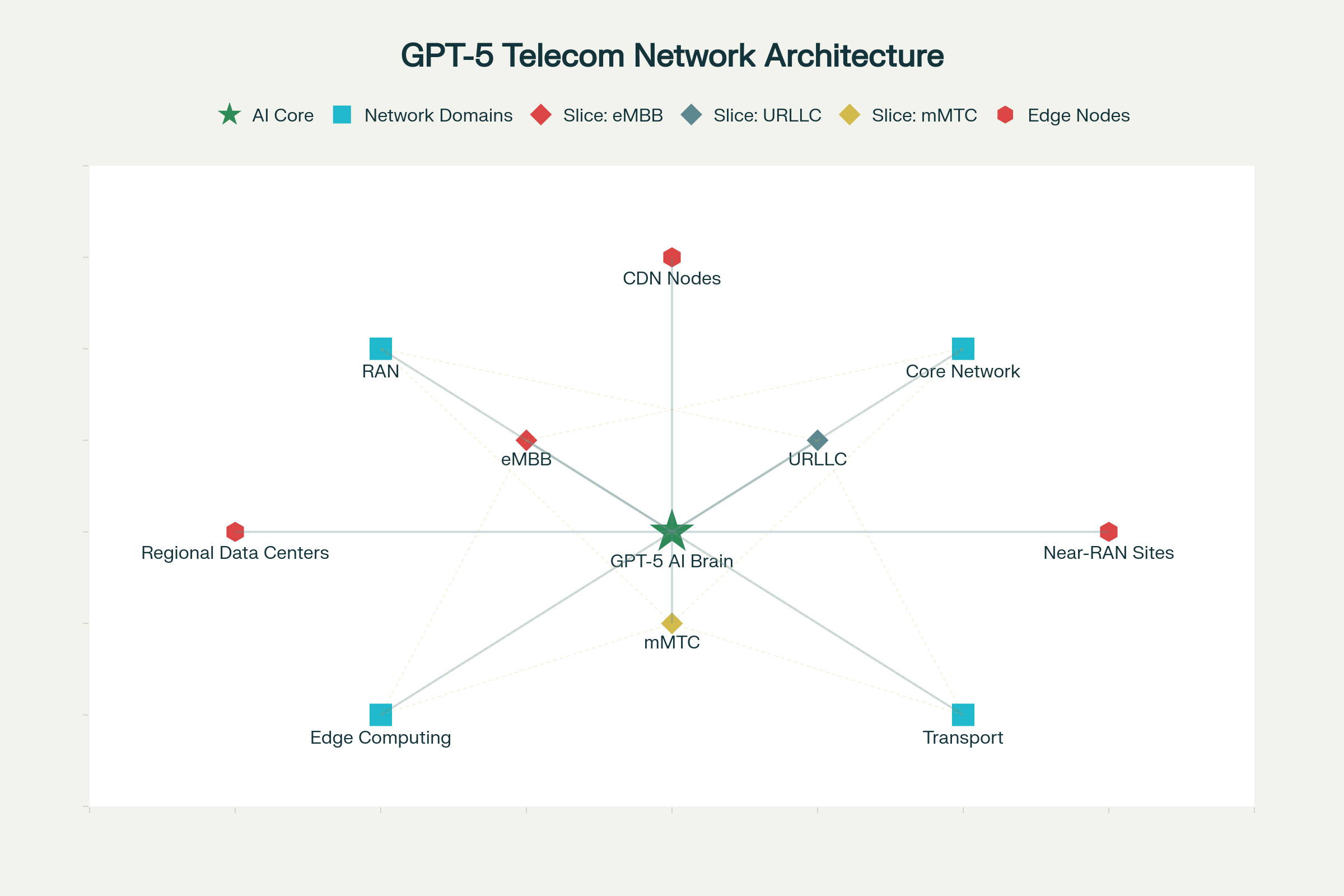
GPT-5 enables the creation of truly intelligent networks that can think, reason, and act autonomously. Unlike previous AI models that required extensive fine-tuning for telecom applications, GPT-5's unified reasoning system can understand complex network topologies, protocols, and performance metrics out of the box.
What this means for me:
Network slicing becomes intelligent: GPT-5 can dynamically optimize 5G/6G slices based on real-time demand, SLA requirements, and business objectives
Edge computing gets smarter: Deploy GPT-5 inference at network edges to reduce latency for AI applications by up to 90%
Autonomous operations: Networks can self-heal, self-optimize, and predict failures before they occur
Well that makes me tad more excited indeed, and I am now actually looking forward to trying the GPT-5 out with all its glory! what about you?
With so much activity today, and the number of LIVEs specially on Youtube, and publications already, there’s gonna be even more of early reviews coming in tomorrow and this weekend, so bracing up for that. also some more detailed videos / reports and guides from OpenAI hopefully and the use cases from different sectors! considering the integration with different tools went pretty fast and almost at the same time. some busy times ahead if it wasn’t already, well.
(EDIT) : One step closer to AGI.
PS Since I din’t see any mention of AGI except on linkedin I just went ahead and asked about AGI too ( so updating the article here)
What Makes GPT-5 "AGI-Adjacent" : AGI-Like Reasoning:
GPT-5 can follow multi-step instructions, coordinate tools, and adapt to changing contexts
It demonstrates agentic capabilities—completing end-to-end tasks rather than just answering questions
The model shows honest self-assessment—knowing when it can't complete a task (a key AGI requirement)
Why Experts Are Cautiously Optimistic
Sam Altman's Own Assessment: is that model is generally intelligent and a substantial step toward something very AGI-like'" However, he admits GPT-5 still lacks continuous learning from new experiences
The Missing Pieces:
Persistent memory: Can't learn from interactions over time
Autonomy: Still requires human prompting for tasks
Adaptability: Can't improve itself without retraining
I hope you found this article interesting, informative, and useful. Do support by liking, subscribe, share it with you colleagues and friends and on social media — X, LinkedIn, or the platform of your choice. You can follow me on linkedin here.
Further reading :
Bandwidth & Broken Hearts: How Telcos Became the Unrequited Lovers of the Digital Age
Wiring the Future: AI, Chips, and the Race to Reinvent the Internet
AI’s Gold Rush 2.0: Unpacking the Psychology, Power, and Paradoxes Shaping Billion-Dollar Bets
Why Tech Journalism Is Now the Most Powerful Beat in the Newsroom
Project Trillion: UK's 10-Year Race to Reshape Global Technology