

Trustworthy AI: Why It Matters and How We Get There
5 elements of future of networking, AI ROI and Impact, Trust gap, Clear frameworks and practical steps

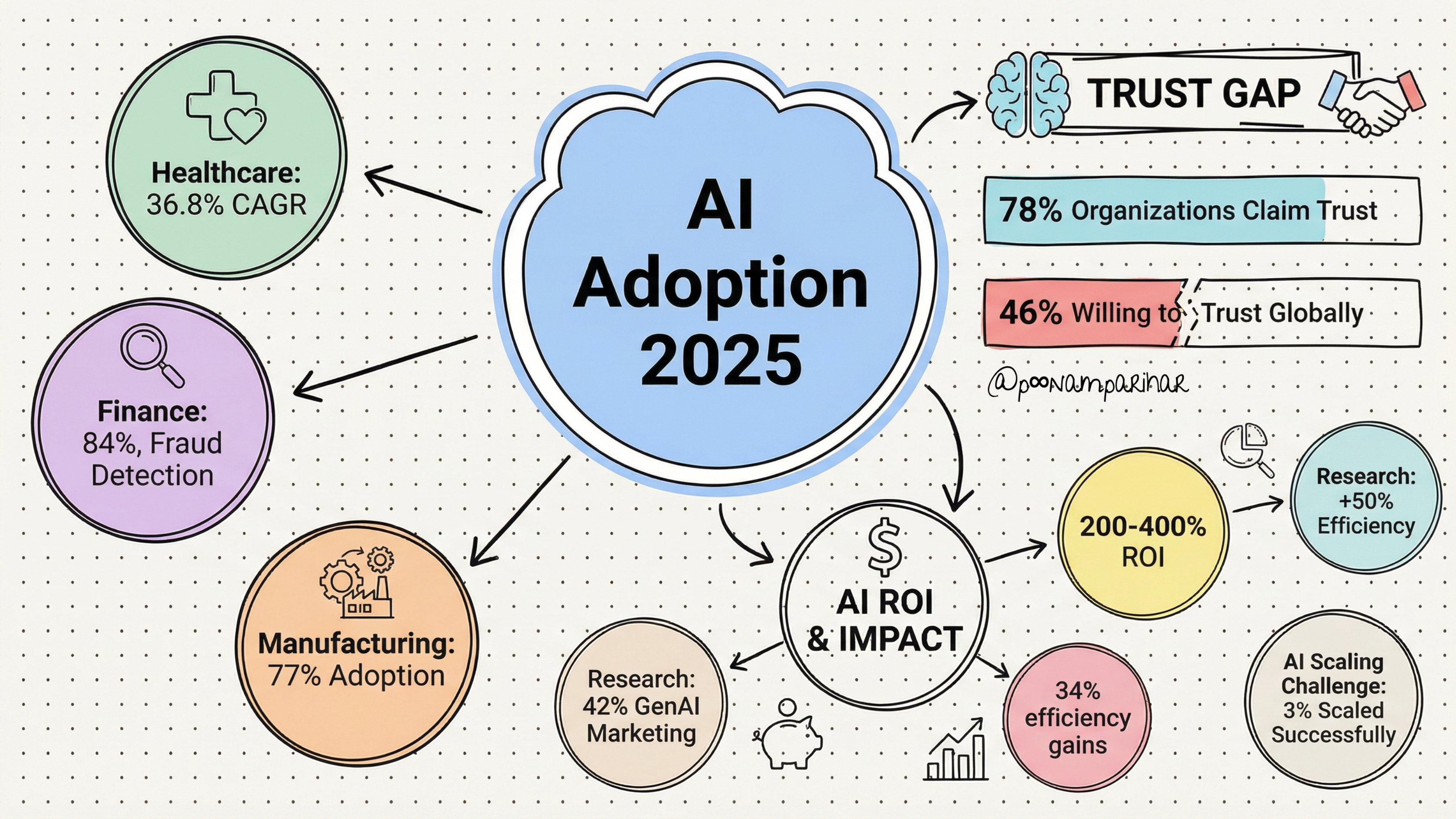
AI is everywhere - powering healthcare diagnostics, factory robots, financial analytics, and customer chatbots. But despite bold claims about “fully trusting” AI, most organizations struggle to use it at scale. So Why is that? Because trust is hard to earn and easy to lose. As AI increasingly influences decisions affecting our health, jobs, and finances, making it trustworthy is no longer optional, it’s essential.
Trustworthy AI in networking, which is my domain area of expertise, mean that decision-making algorithms are secure, transparent, and fair. It requires rigorous auditing, explainable insights, and bias detection to build confidence and reliability into automated operations. By embedding ethical and robust AI, networks can proactively defend against threats while adapting intelligently to ever-changing environments. Its not very different on the application side though.
TL;DR
AI adoption is skyrocketing across all major industries, but trust remains a massive barrier to realizing value.
99% of companies experiment with AI, but only 3% scale it successfully and thats largely due to trust and governance gaps.
Trustworthy AI goes beyond technology: it covers fairness, transparency, accountability, safety, and privacy.
Companies prioritizing responsible AI see fewer failures, faster returns, and safer outcomes.
Clear frameworks and practical steps can help ensure your AI systems are trustworthy and truly pay off.
I believe there are discussions happening of responsible AI, but mostly from governance perspective, which is a very tiny part of it, and we’ll As I was looking at it from future of networking perspective, and since that might influence this post, even though I want to keep it generic, a little bit of background here.
The future of networking is an intelligent, adaptive, and automated environment where data, intent, and AI drive real-time decisions and operations. Networks dynamically respond to business needs, self-optimize, and integrate robust security at scale, and some of the foundational pillars of this transformation are open standards, automation, and trustworthy AI.
5 Elements of future of networking:
Data-Centric Networking
Network Automation
Intent-Driven Networks
Trustworthy AI
Knowledge Plane
Why Trustworthy AI Matters
Financial Risks: 64% of enterprises lost over $1 million to AI failures last year, mostly from ungoverned or misunderstood AI deployments.
Scaling Failure: While 99% are using or experimenting with AI, only 3% report success at deploying it widely in their business.
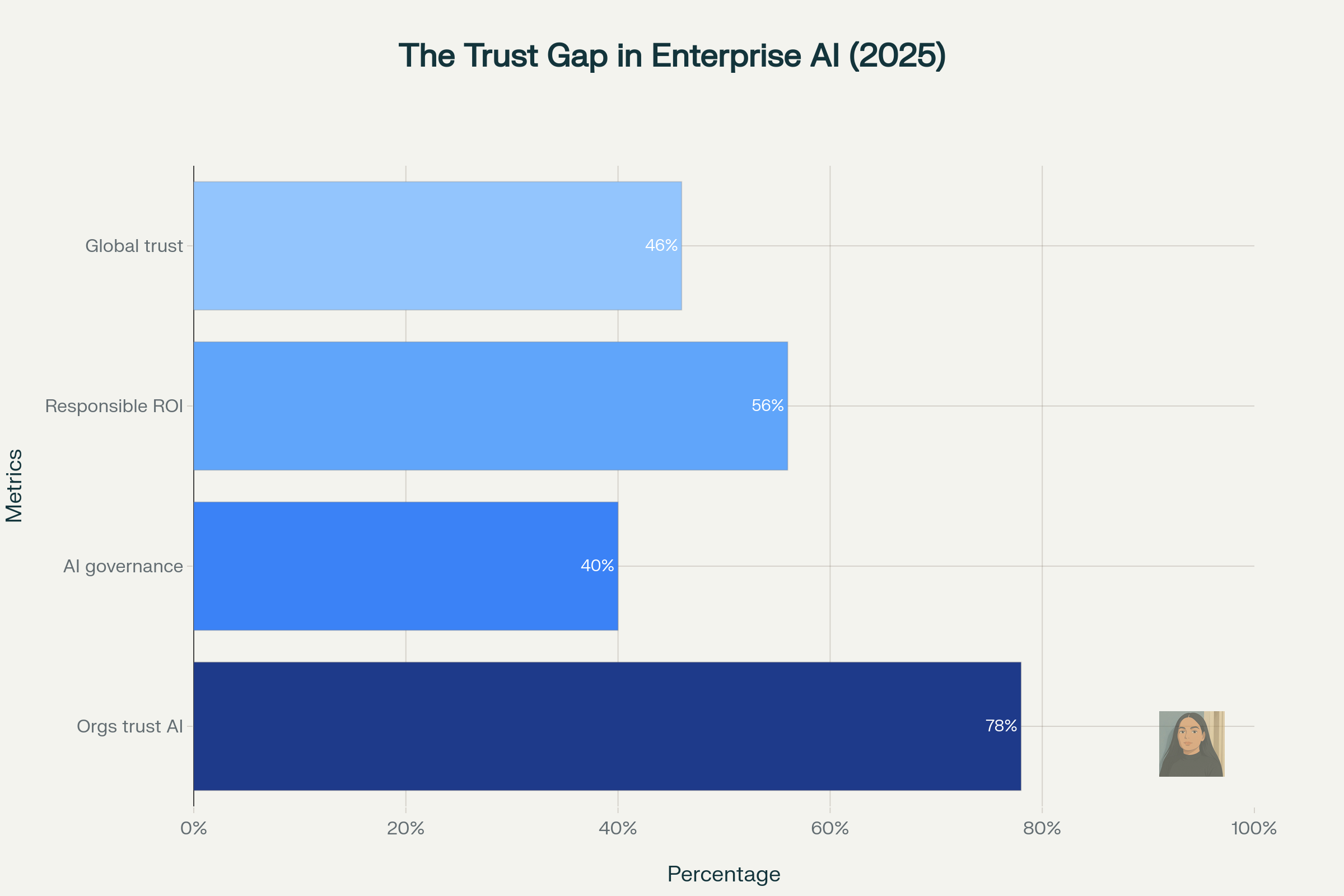
The Trust Gap: 78% of organizations “claim” to trust AI, but only 40% actually have governance structures to support it.
Better Outcomes: Companies with responsible, trustworthy AI practices have 28% fewer failures, much faster time-to-value, and stronger customer and stakeholder trust.
What Makes AI “Trustworthy”?
Trustworthy AI means more than just safe technology. It requires a combination of technical, ethical, and organizational practices. Key elements and core principles include:
Fairness: AI should not discriminate or reinforce existing biases. It’s critical to ensure diverse, representative data and to actively check for unfair outcomes.
Transparency & Explainability: Both how the AI works (“transparency”) and why it makes certain decisions (“explainability”) must be clear. It should not be hidden in a “black box.” If users and stakeholders can’t understand or audit an AI’s choices, trust breaks down.
Accountability: Clear human oversight and responsibility must be assigned for AI outcomes. This includes being able to challenge and redress automated decisions that may cause harm.
Safety & Security: AI systems should be robust, reliable, and designed to do no harm. This includes defending against hacking, errors, and unpredictable failures.
Privacy: Protect user and company data, in full compliance with laws and with clear boundaries on how data is used.
Governance: Establish structures, policies, and continuous oversight to ensure responsible AI use throughout the entire system’s lifecycle.
Industry Trends and AI Adoption
AI impact and trust issues however play out differently depending on the sector. for example,
Healthcare: AI diagnoses and personalized medicine offer big gains but face high scrutiny for fairness, explainability, and safety.
Manufacturing: AI boosts quality control and predicts equipment failures, but scaling up is often blocked by data-quality and governance issues.
Finance: Automation enables faster credit checks and fraud detection, but requires transparency and explainability for regulators and customers.
Retail & Marketing: AI-powered personalization can drive higher conversion rates, if done responsibly, ensuring customer data is protected and bias is avoided.
Key Data Points (2025)
Enterprise Use: 78% use AI in at least one business function; 87% of large firms deploy AI widely.
Scaling Success: Only 3% of companies get AI systems working at scale.
ROI & Efficiency: Those who do achieve 34% efficiency gains and 27% cost reductions within 18 months.
Skills Gaps: 73% of firms cite lack of AI-ready, trustworthy data as their #1 challenge; skills shortages remain a huge bottleneck.
Public Perception: Only 46% of people are willing to trust AI globally.
Governance Gap: 40% of companies have formal AI governance, but 78% claim “full trust.”
How to Build Trustworthy AI?
so whats could pave the path to building trustworthy AI - well its not really very different from what actually defines it. -
