

Wiring the Future: AI, Chips, and the Race to Reinvent the Internet
Founders’ Playbook from McKinsey’s 2025 Tech Trends Outlook and other insights.

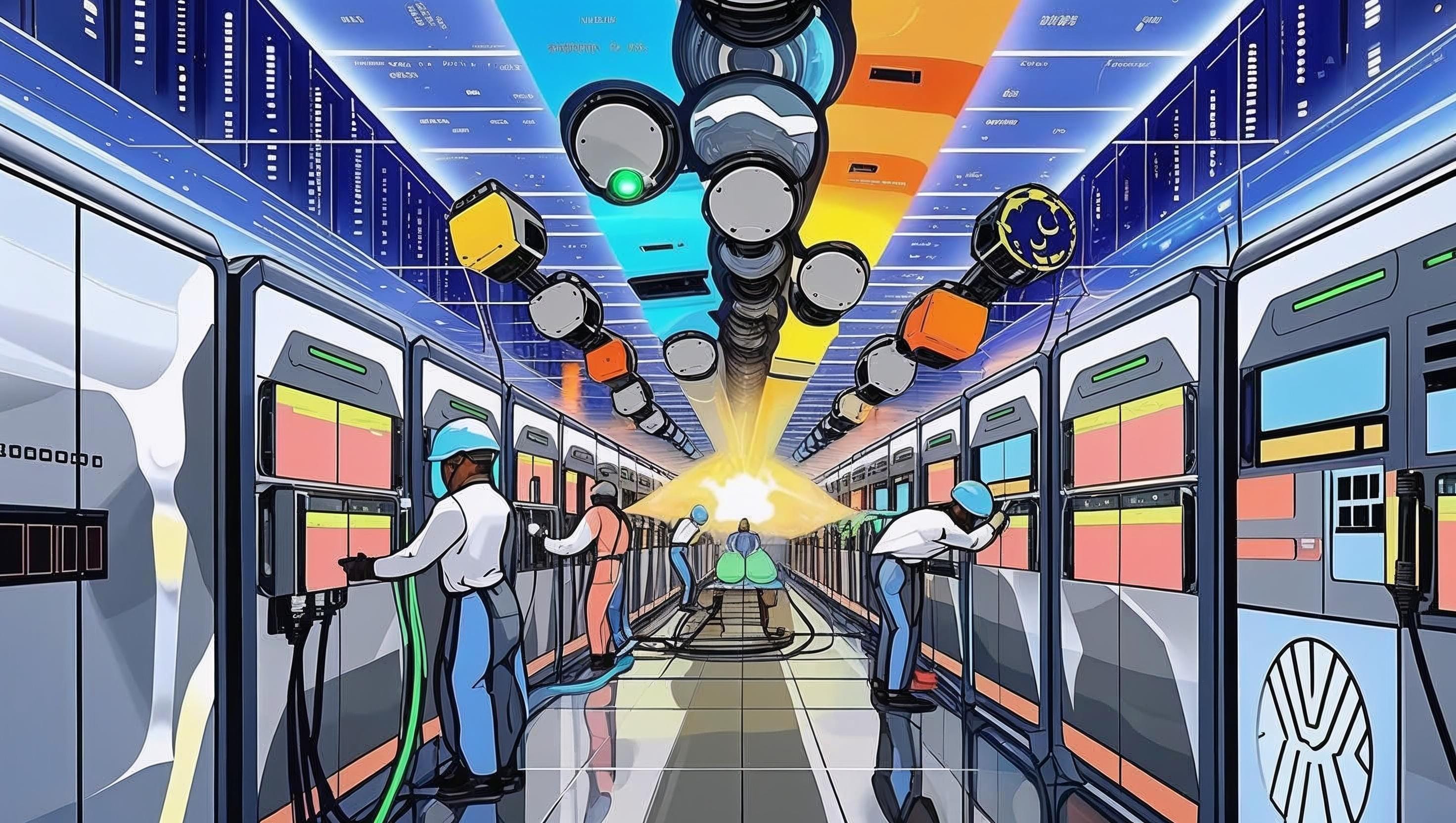
NotebookLM podcast review of McKinsey’s Tech trends outlook 2025 report.
We’re in Q3 of 2025, and as a founder at the intersection of deep technology and future global networks, I wake every day to an industry landscape profoundly more complex—and thrilling—than even the boldest of the forecasts I could imagine, and there’s been many this year.
The exponential surge in AI capabilities in past couple of months isn’t simply about software anymore; it’s a tidal force, demanding co-innovation from silicon, network protocols, and cloud fabric, right down to new market structures. The lines have blurred: we are now co-designing semiconductors unique to our workloads, partnering on sovereign data clusters, and architecting security for cross-border agent ecosystems—all while racing to escape the gravitational pull of legacy infrastructure. and as a builder- founder who’s lived the journey from prototype to hyperscale, I recognize that value creation no longer happens at the product alone, but in assembling the right convergence of talent, governance, and ecosystem. The world’s digital nervous system is being rewired—and we are the hands pulling the cables and penning the standards.
when Veo3 got integrated in Gemini Chat recently, I did a short trailer video to quickly test it out. Asked perplexity to pull out some of my journey and make it a mission impossible sort of an adventure. Amusing as it may sound, none of it fiction anymore. My life as I imagine turning in to the classic story of a lone founder in a dimly lit server room, surrounded by blinking lights and whiteboard equations. —the network is humming with AI agents negotiating network traffic, quantum prototypes quietly failing (sometimes spectacularly), and the pizza delivery drone drops off lunch on the fire escape. Welcome to the modern telco startup, where building the internet’s future feels oddly like assembling a spaceship while flying it to Mars.
The battleground has shifted from cobbling together open source routers to orchestrating multi-cloud clusters, securing supply chains for custom semiconductors, and deciphering AI ethics frameworks before breakfast. Yesterday’s deep tech founder needed to out-engineer competitors; today’s must out-think regulations, out-hustle venture capital, and out-collaborate entire ecosystems. Every day is “demo day,” not just to impress investors, but to prove your network fabric, trust models, or agentic AI “virtual coworkers” can survive the next quantum leap. If this feels relentless, that’s because it is. But it’s also exhilarating, and every hotshot AI, quantum prototype, or 6G testbed is a new brushstroke on the digital canvas of civilization.
This is no longer the future. It’s the present. And I am not alone—leaders from every sector are realizing that value creation, risk management, and industry leadership now hinge on understanding, and acting on, what McKinsey calls “frontier technology trends.” In this post I want to dig a bit deeper just released “McKinsey Technology Trends Outlook 2025” report, from founder’s perspective and find out what of these are simply tech fads or distant possibilities or if they will be the building blocks of tomorrow’s winners and losers.
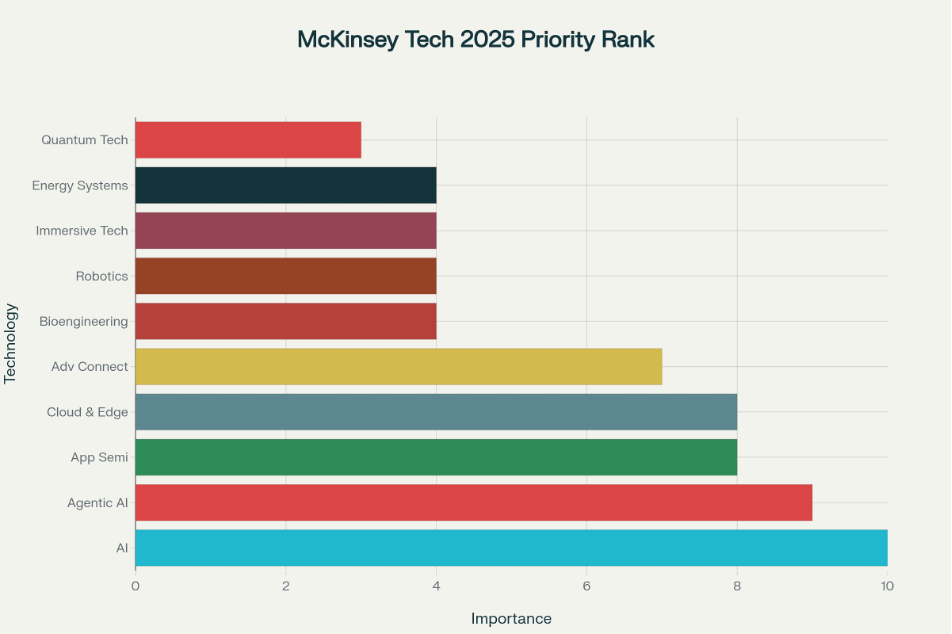
This "Tech trends outlook 2025" report outlines 13 frontier technology trends, with Artificial Intelligence as a foundational amplifier, that are transforming global business. It details their breakthroughs, use cases, and potential impact on companies across sectors, helping leaders navigate increasing complexity and global competition. The report aims to guide executives in deciding which technologies are most relevant for their strategic future.
Top Priority: The AI Revolution
Artificial Intelligence (AI) stands out as the most critical and urgent trend. It is not merely a powerful technology wave on its own, but also a foundational amplifier that accelerates progress and unlocks new possibilities across all other trends. The evolution of AI solutions increasingly combines aspects of applied AI and generative AI, now examined together.
AI Revolution: Current State and Future Potential
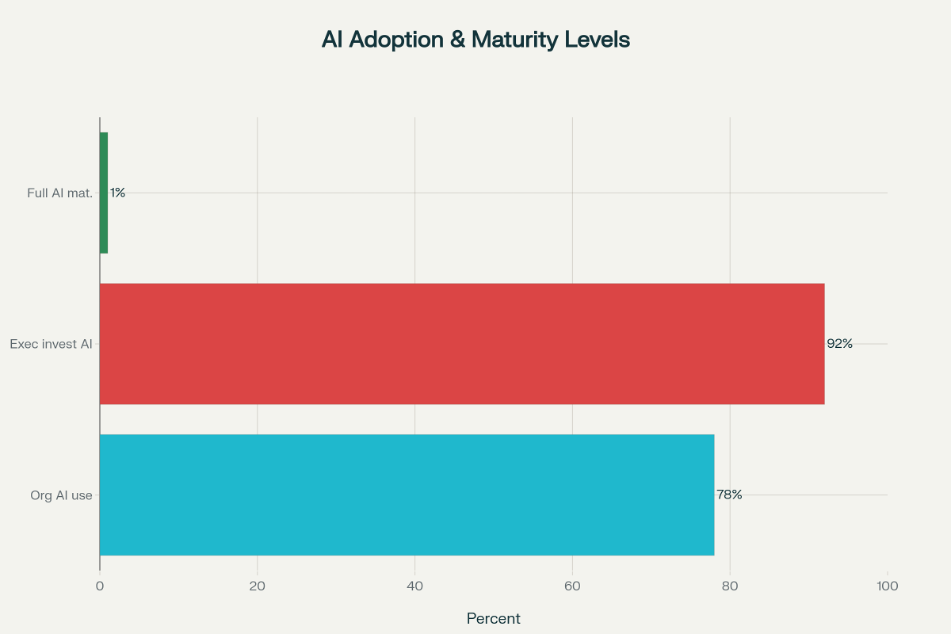
The widespread adoption of AI contrasts sharply with organizational maturity levels, revealing significant opportunities for growth and development.
Unprecedented Investment Momentum
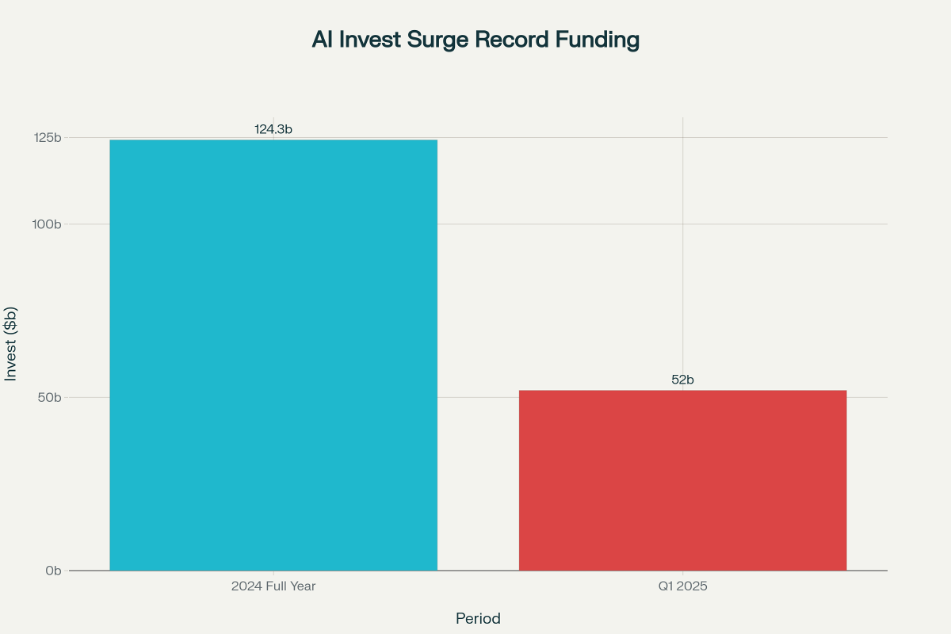
The scale of AI investment has reached historic proportions, demonstrating unprecedented market confidence and capital allocation toward artificial intelligence technologies. The investment trajectory shows remarkable acceleration, with first-quarter 2025 funding approaching half of the entire 2024 annual total, signaling intensifying market interest and the transformative potential investors see in AI technologies.
Critical Barriers to AI Implementation
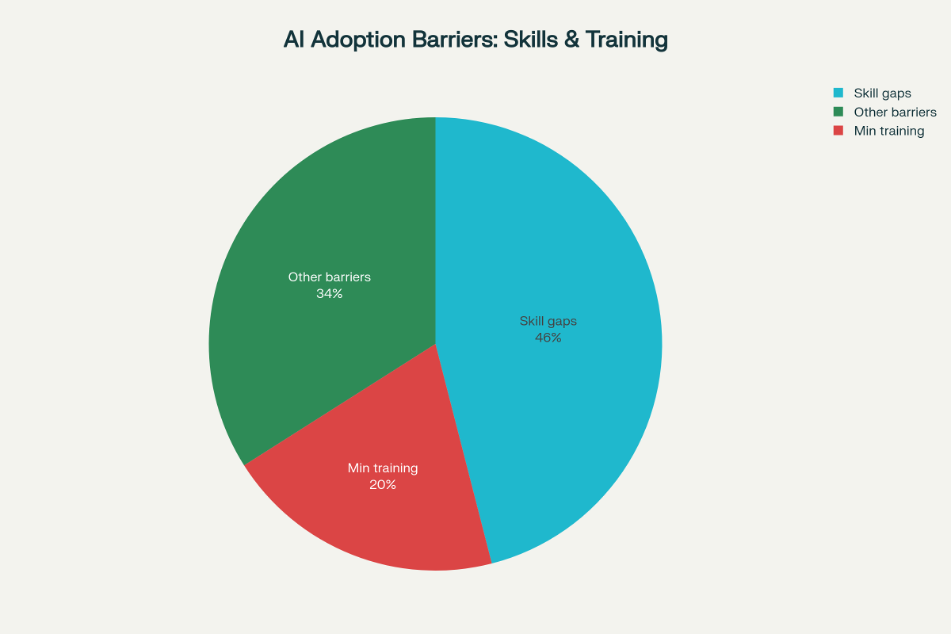
Skills and training gaps represent the most significant obstacles to AI adoption, creating bottlenecks that organizations must address to realize AI's full potential. This breakdown below reveals that nearly half of organizational leaders identify skill gaps as primary barriers, while a significant portion of employees lack adequate training, highlighting the urgent need for comprehensive upskilling initiatives.
Key Insights / Lessons from AI
Pervasive Adoption and Future Potential: Seventy-eight percent of organizations surveyed are using AI in at least one business function, and 92 percent of executives are planning to invest more over the next three years. Despite this, it's an early trend, with only 1 percent of leaders saying their companies are fully mature in AI deployments, indicating significant headroom for transformation.
Cost Reduction and Accessibility: The cost of deploying powerful AI models is dropping sharply, and a new generation of smaller, domain-specific models is giving more organizations and devices access to AI than ever before. These smaller models deliver high-quality outputs while requiring much less computing power, dramatically reducing costs and energy consumption.
Multimodality and Reasoning: Multimodal AI, capable of processing and generating text, images, video, and audio, has opened new creative and scientific frontiers. AI is also getting better at complex, multistep reasoning, allowing foundation models to strategically plan and adapt to variability.
Responsible AI Imperative: As generative AI adoption accelerates, concerns persist over plagiarism, accountability, data poisoning, bias, and fairness. Companies face growing pressure to demonstrate transparency and accountability, with ethics becoming a strategic lever that can accelerate or stall scaling and investment.
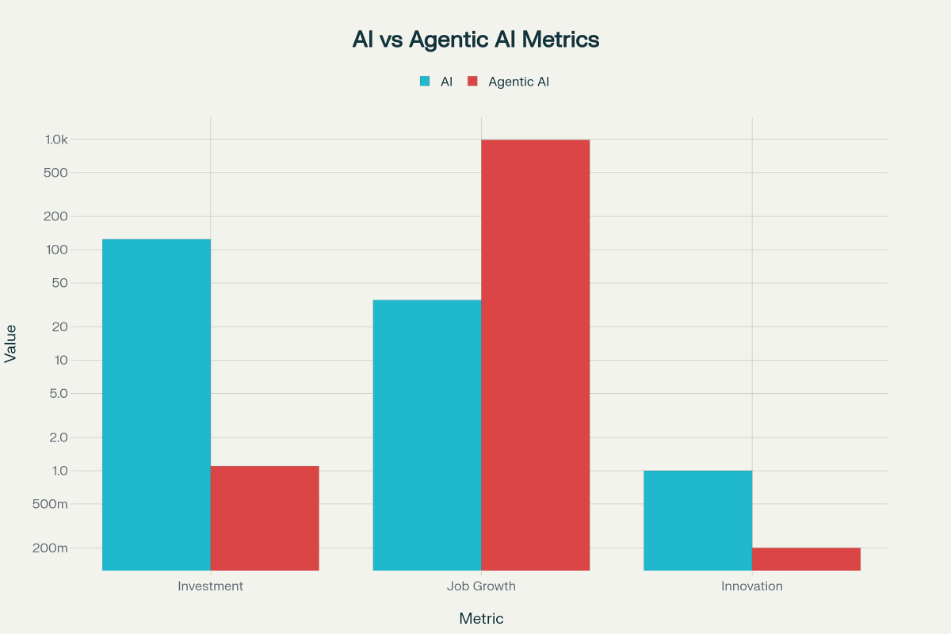
Global Investment Surge: Equity investment in AI reached $124.3 billion in 2024. In the first quarter of 2025 alone, AI companies raised $52 billion, including the SoftBank-led $40 billion investment in OpenAI, marking the largest venture capital funding deal ever recorded. Tech giants are projected to spend hundreds of billions on AI-related capital expenditures in 2025.
Talent Gap: Forty-six percent of leaders cite skill gaps as a major barrier to AI adoption, and over 20 percent of employees report minimal training. Addressing upskilling needs and adapting to new human–machine collaboration models are crucial.
Action for Leaders: "The true differentiator is not just technical capability; it is the ability to rewire operating models, talent, and governance, embedding AI deeply into workflows to deliver measurable business impact".
Big Questions for the Future of AI:
What primary use cases should companies prioritize to drive innovation, adapt leading solutions, or build proprietary capabilities?
How can organizations evolve their operating models, talent, and governance fast enough to scale adoption and capture value?
How will the economics of smaller, specialized, and open-source AI models shift the balance of power?
What is the appropriate corporate response to risks, including data privacy, security, equity, fairness, compliance, and intellectual property?
Agentic AI: Explosive Growth Trajectory
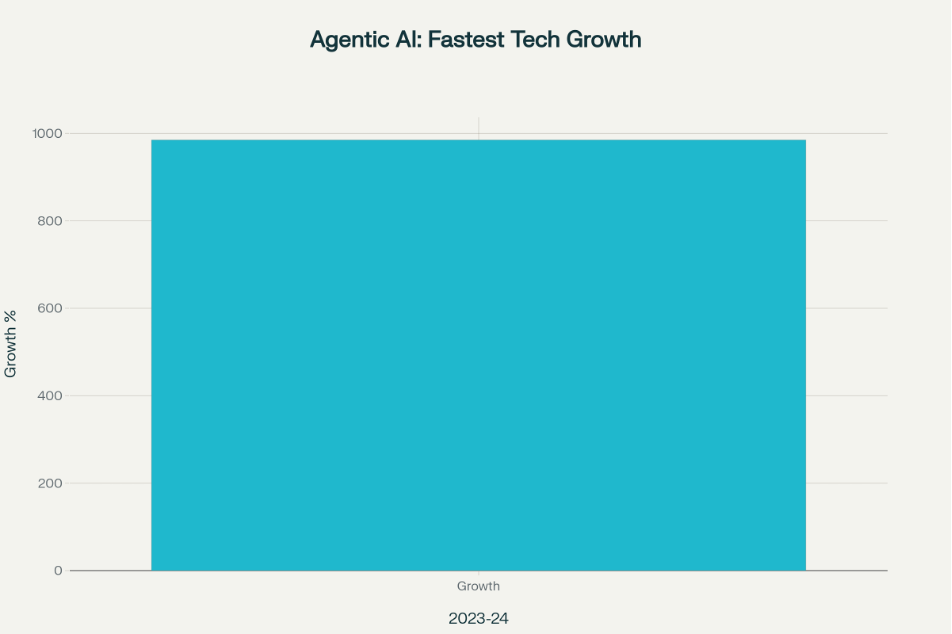
The emergence of Agentic AI represents one of the fastest-growing segments within the broader AI landscape, characterized by remarkable job market expansion. This new trend combines the flexibility of AI foundation models with the ability to act autonomously, creating "virtual coworkers" that can plan and execute multistep workflows.
Key Insights / Lessons from Agentic AI:
Rapid Growth: Despite relatively low equity investment levels compared to more established trends, agentic AI is among the fastest-growing trends highlighted in the report, signaling its potentially revolutionary possibilities. Its job postings saw a +985% difference from 2023 to 2024, with equity investment reaching $1.1 billion in 2024.
Unique Capabilities: Agentic AI agents can:
Handle a "long tail" of unpredictable tasks that are not easily codified into preset rules, thanks to large language models (LLMs).
Utilize digital tools, such as web browsers, just like a person would, enabling them to "read" websites and fill out forms.
Receive instructions and coaching in natural language, similar to interacting with a human coworker.
Generate work plans that are understandable and modifiable by humans, and can even communicate among themselves.
Latest Developments: Progress includes AI-powered, general-purpose agent platforms, increasingly long chains of effective multistep reasoning through multiagent workflows, a new focus on specific business solutions (e.g., software development, sales optimization, customer support), growing momentum behind deep-research knowledge agents, and agents that can "talk" to one another (e.g., Anthropic's Model Context Protocol, Google's Agent2Agent protocol).
Urgent Governance Needs: The rapid progress of agentic AI underscores a critical need for robust governance frameworks to address trust, liability, and ethical concerns.
Thought from Leaders: "Agentic AI moves AI from a passive tool to an active collaborator with enterprise workflows". "Organizations that learn to build teams that bring people and agent coworkers together will unlock new levels of speed, scale, and innovation".
Big Questions for the Future of Agentic AI:
What are the workforce implications of agentic AI at scale?
What trust and safety tooling and techniques will be needed to mitigate risks?
To what extent should agentic AI be allowed to operate independently, and how can a balance be struck between AI autonomy and human oversight?
Critical Enablers: Compute and Connectivity Frontiers
The immense demands placed by AI necessitate significant advancements in computing and connectivity, making these trends equally high-priority as enablers.
Application-Specific Semiconductors
Purpose and Importance: These are purpose-built chips optimized to perform specialized tasks, offering superior speed, energy efficiency, and performance compared to general-purpose architectures. They are primary catalysts, driven by the exponentially higher demands for computing capacity, memory, and networking for AI training and inference.
Innovation Surge: Innovations in this sector have spiked, reflected in quantitative metrics like patent numbers, with the semiconductor industry leading in patent activity across all technology trends.
Market Dynamics: New AI hardware vendors are challenging established leaders, with tech companies like Amazon, Google, Meta, and Microsoft investing heavily in custom ASICs and proprietary semiconductor technologies.
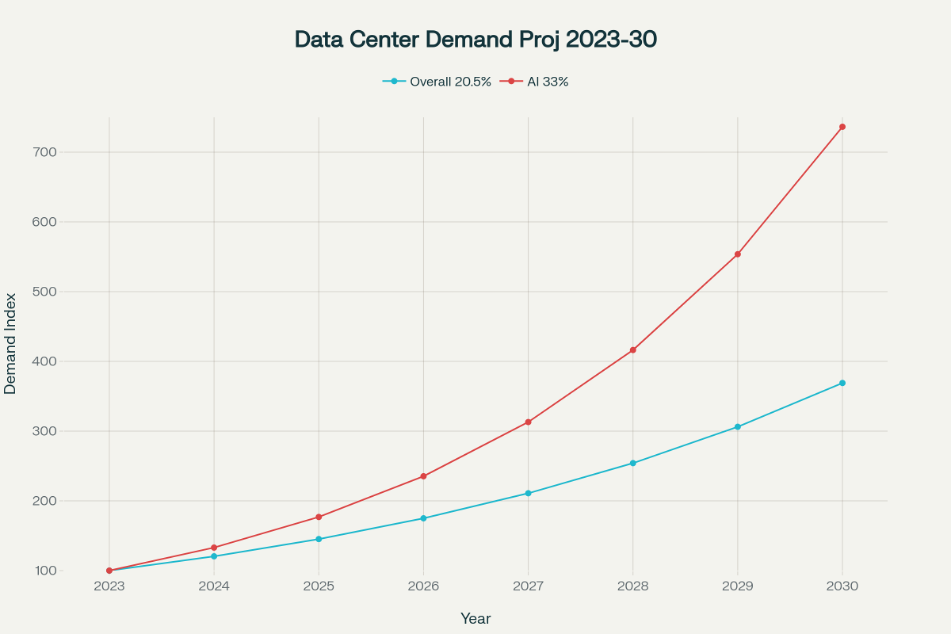
Demand and Supply Challenges: Global demand for data center capacity, especially for AI workloads, is projected to rise significantly (average of 33 percent a year between 2023 and 2030). This necessitates adequate semiconductor supplies to scale effectively. The industry faces "cracks" in global infrastructure due to power constraints and rising compute demands.
Geopolitical Impact: Geopolitical tensions are affecting global supply chains, with countries pursuing self-sufficiency and securing leadership in strategic technologies.
Lesson from Leaders: "The rise of gen AI isn’t just a software revolution; it’s a tectonic shift in hardware demand". "Innovation bloomed across all technology trends from 2023 to 2024, relecting in a broad increase in patent activity, and the semiconductor industry leads the way with the highest number filed overall".
Big Questions for the Future of Semiconductors:
How may the increase in demand for AI-specific architectures reshape the semiconductor market?
How can the industry address AI’s growing demand for high-bandwidth memory (HBM) amid supply chain challenges?
What strategies will semiconductor companies employ to overcome talent shortages and skill gaps?
Cloud and Edge Computing
AI's Reshaping Influence: The rapid evolution of AI is reshaping the entire cloud infrastructure landscape. The surging demand for AI computing has led to deeper collaboration among chip developers, cloud providers, and infrastructure manufacturers.
Capacity Demands: Global demand for data center capacity could rise 19 to 22 percent annually from 2023 to 2030, more than tripling current demand.
Overcoming Constraints: Companies are relocating or expanding to areas with more robust energy infrastructure, developing more efficient computation solutions (e.g., liquid cooling, AI-enabled thermal management), and distributing workloads across multiple clusters and edge environments to optimize performance and reduce latency.
Evolving Landscape: Advances in hardware accessibility and investments have enabled smaller players to enter the cloud market, offering specialized AI-optimized platforms. There's also increasing demand for locally hosted data and compute, driven by concerns about data security, privacy, and geopolitical risks (sovereign clouds).
Lesson from Leaders: "Previous investments in cloud are paving the way for AI. The learnings of deploying cloud at scale are lessons to be applied to AI".
Big Questions for the Future of Cloud/Edge
How can cloud providers effectively reduce their energy consumption and carbon footprint?
How can companies ensure data sovereignty and compliance with evolving regulations in multi-cloud environments?
What will define competitive advantage in the cloud over the next five years: scale, architecture, or ecosystem control?
Advanced Connectivity
Growing Importance with AI: As AI disrupts industries globally, connectivity is becoming even more important.
Infrastructure Enhancement: Technologies like 5G, emerging 6G, Wi-Fi 6 and 7, and low-Earth-orbit (LEO) satellites are enhancing connectivity infrastructure.
Fiber Optics' Role: Fiber optics, in particular, enable AI with high-speed, reliable, and scalable infrastructure, especially due to the explosion of AI data centers.
New Capabilities: The 5G rollout has created a foundation for 6G, which aims to enable sensing for data generation. The network-slicing market is growing, providing specific performance characteristics across network segments. Private-wireless-network market is also picking up steam. AI-RAN (AI-radio access network) is an innovative approach to mobile network infrastructure that allows for supporting both RAN and AI workloads.
Lesson from Leaders: One of the most pronounced connectivity trends during the last year was a significant growth in data center connectivity demand driven by AI". "6G is coming from a standardization point of view and will introduce new capabilities like sensing. This will offer telcos a new monetization possibility, instead of just transporting data. With sensing, they can become data producers".
Big Questions for the Future of Connectivity
What opportunities does advanced connectivity, combined with other trends, offer to improve telecom industry growth and profitability?
How will the rise of LEO constellations and direct-to-device satellite connectivity reshape global communications infrastructure?
How will the telecom industry develop advanced encryption methods and authentication protocols for 6G networks?
Innovation vs Interest Scores for Technology Trends
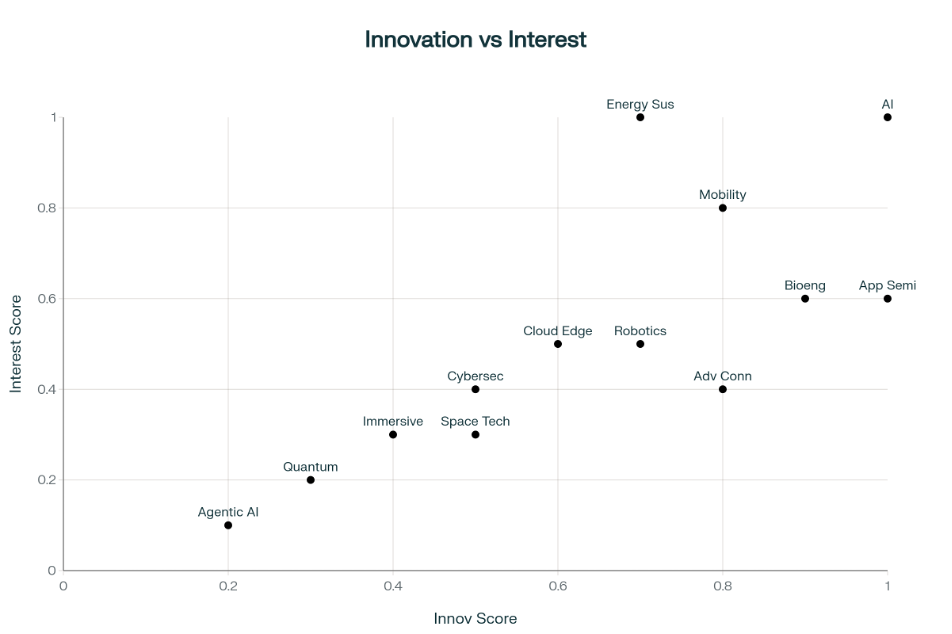
The relationship between innovation and market interest reveals distinct patterns across technology trends. AI leads both dimensions, reflecting its maturity and market penetration, while emerging technologies like quantum computing and agentic AI show lower interest scores despite significant innovation potential.
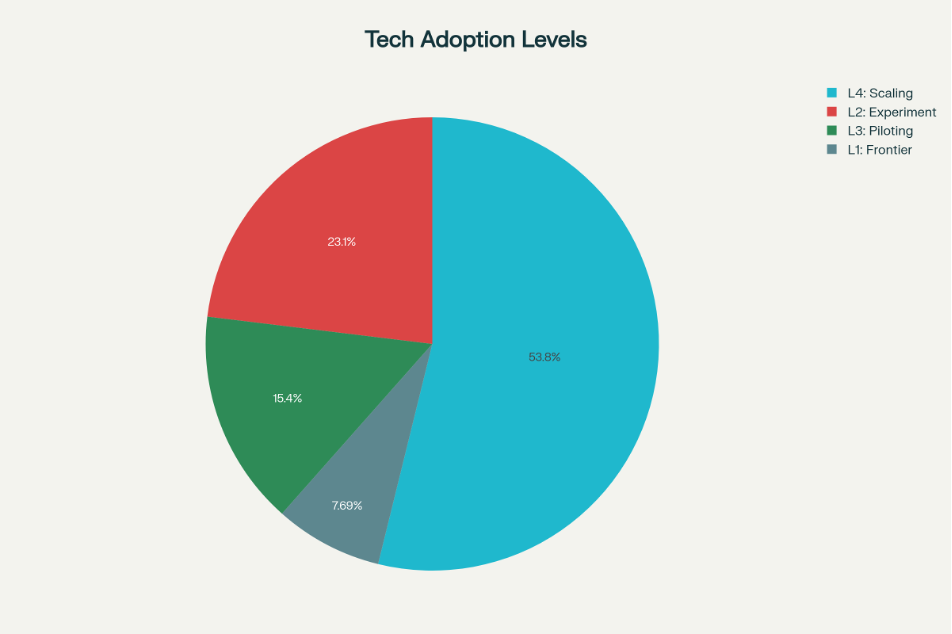
Adoption Patterns
Level 4 (Scaling in progress): 7 trends including AI, semiconductors, cloud computing, and digital trust
Level 3 (Piloting): 2 trends including mobility and energy/sustainability technologies
Level 2 (Experimentation): 3 trends including robotics, immersive reality, and space technologies
Level 1 (Frontier innovation): 1 trend (quantum technologies)
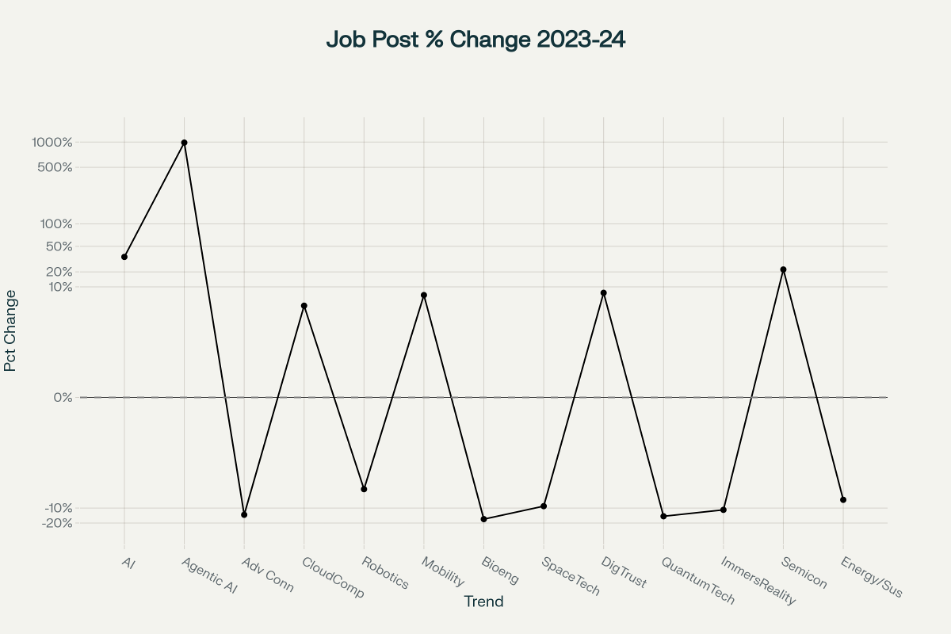
Talent and Labor Market Dynamics
The technology talent landscape reflects the rapid evolution of industry priorities. While most trends experienced fluctuations in job postings, the standout performer was agentic AI with its 985% growth, followed by artificial intelligence at 35% and semiconductors at 22%.
Key talent market insights include:
Skill Gaps as Barriers: 46% of leaders cite skill gaps as a major barrier to AI adoption
Training Deficits: Over 20% of employees report minimal AI training
Evolving Role Definitions: The rise of agentic AI is shifting responsibilities from deterministic coding tasks to higher-order activities like task planning and contextual decision-making
Investment Patterns and Market Dynamics
Notable Investment Trends
The investment landscape reveals clear priorities, with energy and sustainability technologies leading at $223.2 billion, followed by mobility at $131.6 billion and artificial intelligence at $124.3 billion. However, the relationship between investment levels and growth potential varies significantly across trends.
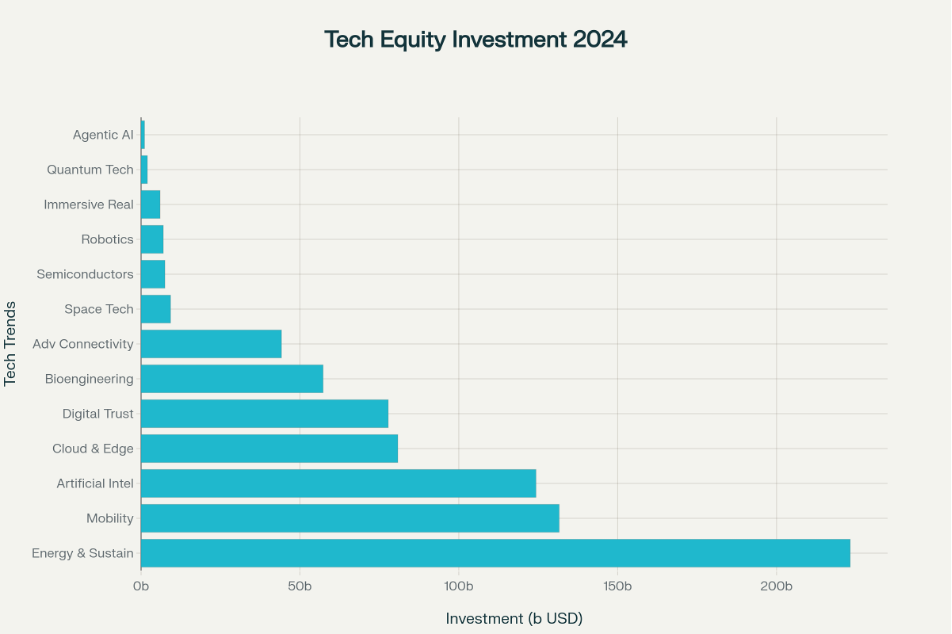
Energy and Sustainability Dominance: Despite challenges in scaling production and reducing costs, clean energy technologies continue to attract the highest investment levels
Mobility Sector Stabilization: Electric vehicle markets show uneven global growth, with strong performance in China and Europe but slower adoption in the United States
Emerging Technology Focus: While receiving lower absolute investment, trends like agentic AI and quantum technologies show rapid growth in interest and innovation metrics
Cross-Cutting Themes and Challenges
Several themes emerge across all technology trends:
Scaling Challenges
The surging demand for compute-intensive workloads has exposed infrastructure limitations, requiring solutions that address not only technical architecture but also talent, policy, and execution challenges.
Responsible Innovation Imperatives
As technologies become more powerful and personal, trust increasingly serves as the gatekeeper to adoption. Companies face growing pressure to demonstrate transparency, fairness, and accountability.
Regional and National Competition
Global competition over critical technologies has intensified, with countries and corporations pursuing self-sufficiency and securing leadership in strategic technologies.
Human-Machine Collaboration Evolution
Technology is becoming more responsive to human intent and behavior, shifting the narrative from replacement to augmentation and enabling more natural, productive collaboration.
Strategic Implications for Business Leaders
The 2025 outlook underscores several critical imperatives for executives:
AI Integration Beyond Deployment: Success requires rewiring operating models, talent, and governance to embed AI deeply into workflows for measurable business impact
Infrastructure Investment: The explosive growth in computing demands necessitates strategic investments in semiconductors, cloud capabilities, and connectivity infrastructure
Talent Development: Addressing skill gaps through comprehensive upskilling programs and adapting to new human-machine collaboration models is crucial
Trust and Ethics: Building robust governance frameworks and demonstrating responsible innovation practices are essential for long-term success
Ecosystem Thinking: The interconnected nature of these technologies requires collaborative approaches and strategic partnerships
Looking Ahead: Key Questions for 2025 and Beyond
As these technologies continue to mature and converge, several critical questions will shape their future impact:
How will organizations balance AI autonomy with human oversight as agentic systems become more sophisticated?
What regulatory frameworks will emerge to govern the responsible development and deployment of powerful AI systems?
How will geopolitical tensions affect global technology supply chains and innovation ecosystems?
What new business models will emerge as these technologies reach full commercial maturity?
McKinsey's Technology Trends Outlook 2025 reveals a technology landscape in rapid transformation, driven primarily by AI's emergence as both a standalone powerhouse and an amplifier of other innovations. While significant opportunities exist across all 13 trends, success will depend on organizations' ability to navigate complexity, invest strategically in enabling infrastructure, and build the trust necessary for widespread adoption.
The organizations that will thrive in this AI-powered future are those that move decisively from experimentation to scaled adoption while building robust frameworks for responsible innovation. As the lines between digital and physical continue to blur, the companies that act with focus and agility will not only unlock new value but also shape the future of their industries.
For executives, success will hinge on identifying high-impact domains, investing in necessary talent and infrastructure, and addressing external factors like regulatory shifts and ecosystem readiness. For the deep tech founders like myself is both exhilarating and sobering. No single leap in cloud, connectivity, or AI will determine tomorrow’s winners; rather, it’s the integration and orchestration of these advances in real time, under the accelerating pressure of regulation, geopolitics, and evolving markets, that will decide who shapes the future.
We are called not just to invent, but to scale responsibly, to drive adoption amid growing energy and talent constraints, and to rebuild trust by making transparency and ethical stewardship central to every layer of our stack. It’s this convergence—the relentless frontier pursuit coupled with pragmatic collaboration—that now defines our job description. Those who can master both the underlying science and the art of ecosystem-building will define not just new products, but new sectors and societies. The playbook is unwritten, and the stakes have never been higher.
I hope you found this article interesting, informative, and useful. Do support by liking, subscribe, share it with you colleagues and friends and on social media — X, LinkedIn, or the platform of your choice. You can follow me on linkedin here.