



A very happy new year to all the readers / subscribers.
For this final post of 2025, I had the follow up for ‘What not to do in 2026” ready but while reviewing my archives, I realized I haven’t had a chance to focus much on Quantum in last 6 months except a few short sections in past articles that I could write about innovations in Quantum sector. ( I am adding those in buttons links below) So instead of going with that, and appending the substack archives relook - I am going Quantum!
For those not very familiar with Quantum, do not fret, I have very deliberately avoided the high end physics or technical jargon that makes in feel like complex subject especially for an year-end article. My focus is more on Quantum AI integration, which is also something I am working on at the moment - the application layer ( I’ll explain below and also in future posts, what that is) and have used it as an accelerator metaphor to AI, so it’ll feel like a breeze to read.
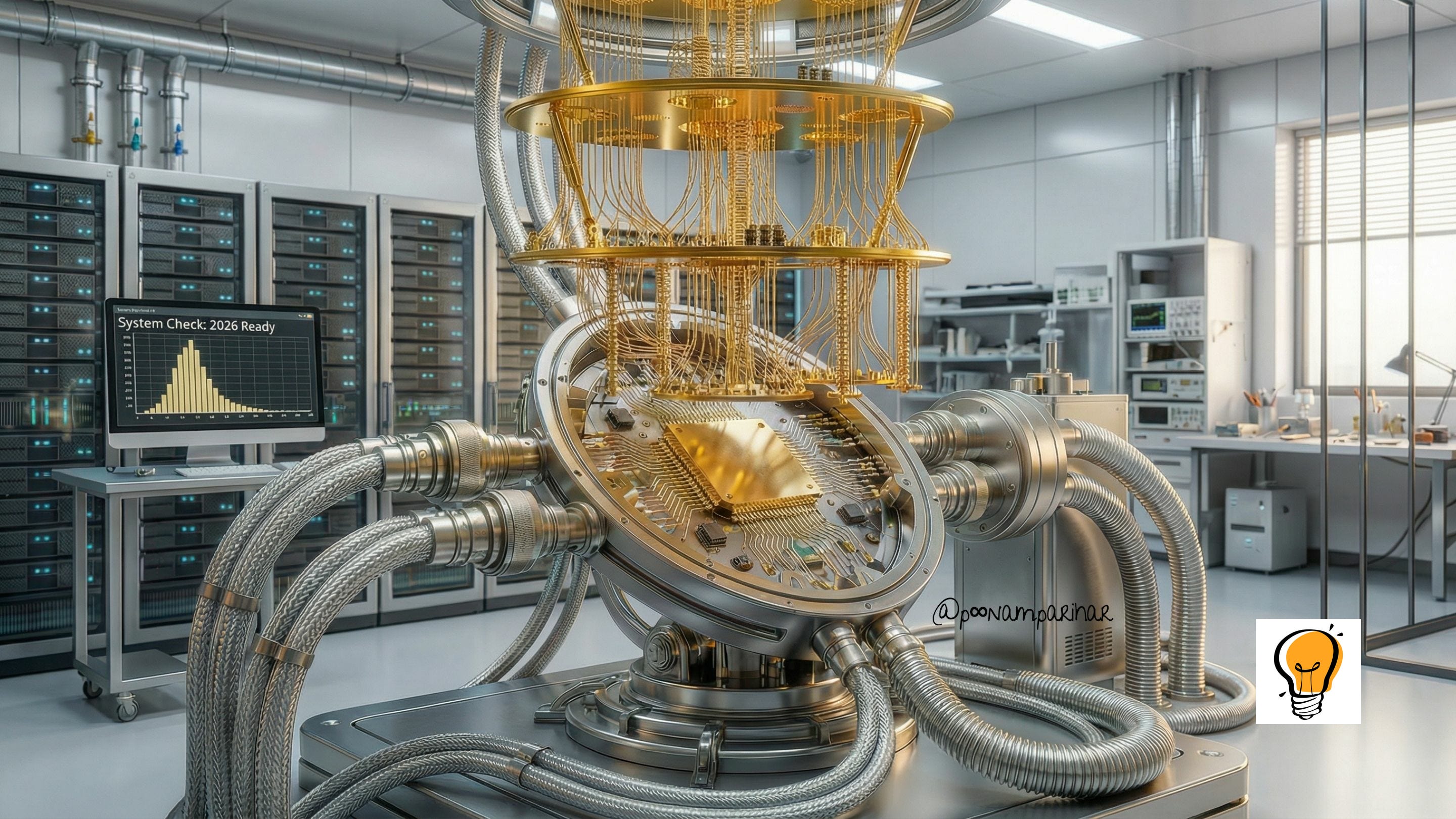
When most people hear the word “Quantum,” they imagine those massive, gold, chandelier-like computers sitting in freezing laboratories. That imagination is correct. when I created the image above, I made sure it was technically correct, while depicting something progressive.
For years, we have talked about “qubits” and “superposition” like they were far-off magic tricks. But over the last two years, lot of things have shifted. In 2024 and specially in 2025, the industry has moved away from just building bigger “gold machines” and have started focusing on the application layer, meaning the “software” that connects quantum power to the AI tools we already use.
Think of the AI tools you use today as high-performance engines. They are incredible, but they eventually hit a ceiling when problems become too complex.
Quantum is the super-charger that helps AI break through that ceiling.
While traditional AI looks at options one by one, a “Quantum-AI” system can explore countless possibilities simultaneously. It’s the difference between a librarian searching for a book page-by-page and one who can see every page of every book at the exact same moment.
What has changed in 2025, and especially as we close the year is that we have stopped treating quantum as a standalone experiment or deep-quantum ie qubit counts and physics of it. Instead, it became a specialized “plugin” for our global networks, where quantum systems are becoming reliable components of a broader computational stack Whether it’s helping a 6G phone network stay perfect in a crowded city or helping a scientist find a life-saving drug in days instead of years, Quantum is no longer just a laboratory curiosity. it’s the next gear for the AI revolution. and you don’t need to understand the physics of the “gold machine” to benefit from its power; you just need to be ready for your AI to get a lot more capable.
But its not about replacing classical AI. its about integrating Quantum with AI a building Quantum Kernels ie modular subroutines that can solve specific bottlenecks where traditional machine learning ends up failing.
Quantum Development Roadmap (2024–2030)
2026 is the first year where non‑quantum teams ship products that quietly call quantum kernels over an API, often without their users ever seeing the word ‘quantum’
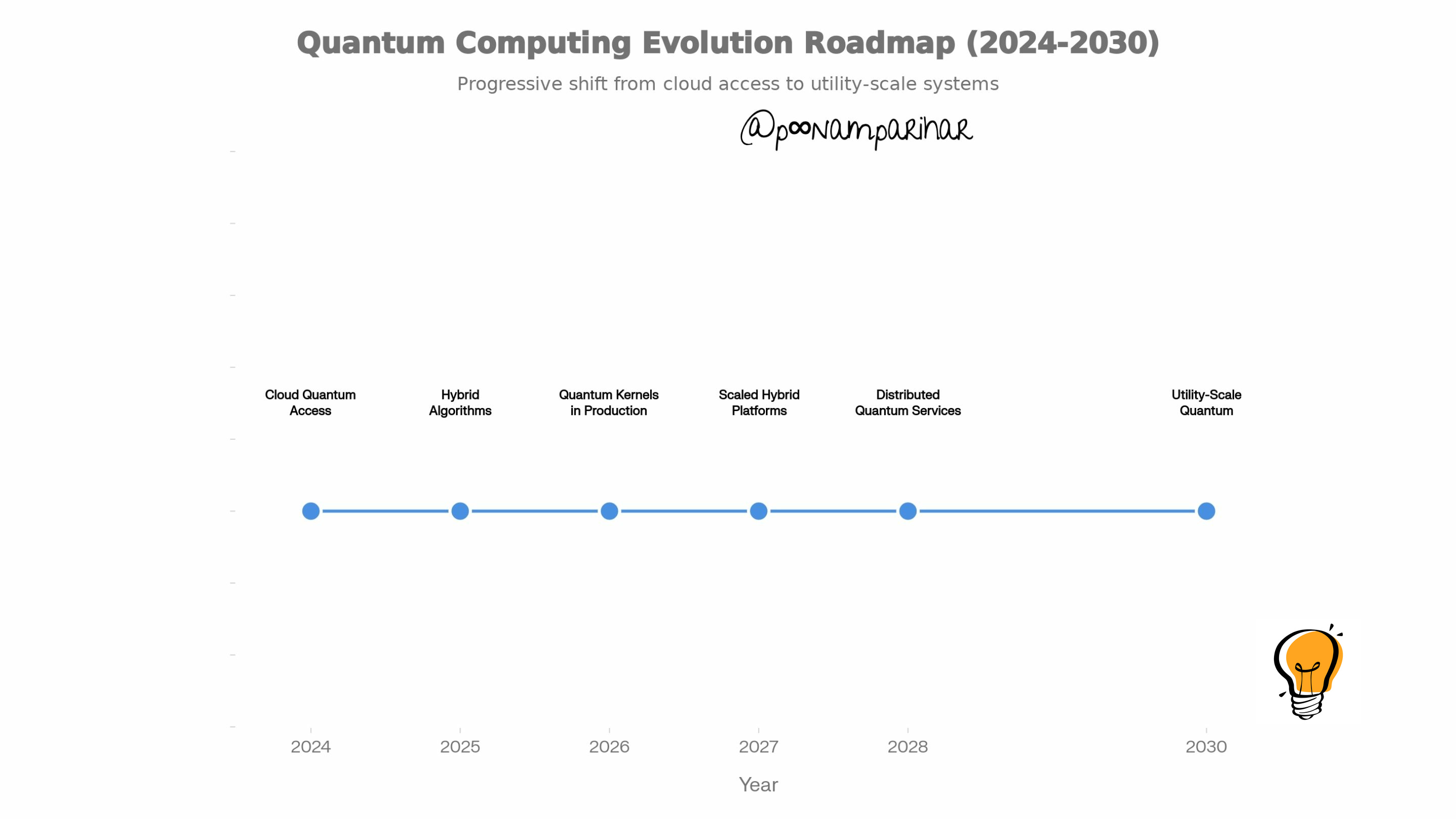
This roadmap above shows how quantum is evolving from a lab curiosity into a general‑purpose capability that any industry can tap into. Today, most organizations meet quantum through cloud access and small experiments. Over the next few years, the real value comes from hybrid algorithms and quantum kernels quietly embedded inside existing software, where they handle the hardest optimization or simulation steps. By the end of the decade, quantum is expected to feel less like a separate technology and more like another invisible layer of infrastructure powering finance, logistics, healthcare, manufacturing, and more in the background.
2024 – Cloud Quantum Access
Basic access to quantum processors via cloud platforms; mostly experimental and research-focused.2025 – Hybrid Algorithms
First practical hybrid classical–quantum algorithms appear, tackling niche optimization and simulation problems.2026 – Quantum Kernels in Production
Specific quantum subroutines (“kernels”) start running inside real products and workflows in areas like optimization, simulation, and sampling.2027 – Scaled Hybrid Platforms
Mature platforms manage classical and quantum resources together, hiding hardware complexity behind APIs and SDKs.2028 – Distributed Quantum Services
Multiple quantum devices and classical clusters coordinate as networked services, supporting larger problems and 24/7 workloads.2030 – Utility‑Scale Quantum
Quantum becomes a standard infrastructure layer—consumed like cloud compute or storage rather than as a standalone experiment.
The Differentiators?
Not a replacement, an accelerator: Quantum supplements classical computing where problems are too complex or high‑dimensional.
Hybrid is the default: Most real systems will stay mostly classical, with a few well‑chosen quantum calls.
APIs, not physics: Developers and companies interact with quantum through SDKs and services, not direct hardware control.
Cross‑industry impact: Any sector that optimizes, simulates, or searches large possibility spaces can benefit as these stages unfold.
The Emergence of the Hybrid Stack
Now the “quiet breakthrough” of 2026 would be the convergence of AI and quantum into a single, mutually reinforcing architecture, which means -
Quantum-Accelerated AI: We are not redesigning entire AI models what we are doing instead is “dropping in” quantum optimization layers. The subroutines that can handle the heavy lifting for tasks like molecular simulation or high-dimensional stochastic sampling that are too complex for GPUs.
AI-Managed Quantum Systems: and this may turn Agentic AI and Large Language Models (LLMs) in to some “junior laboratory scientists” who autonomously guide quantum calibration and error correction. This is exactly the automation what can allow quantum hardware to move from fragile experiments to repeatable industrial use.
High-Benefit Industries in 2026
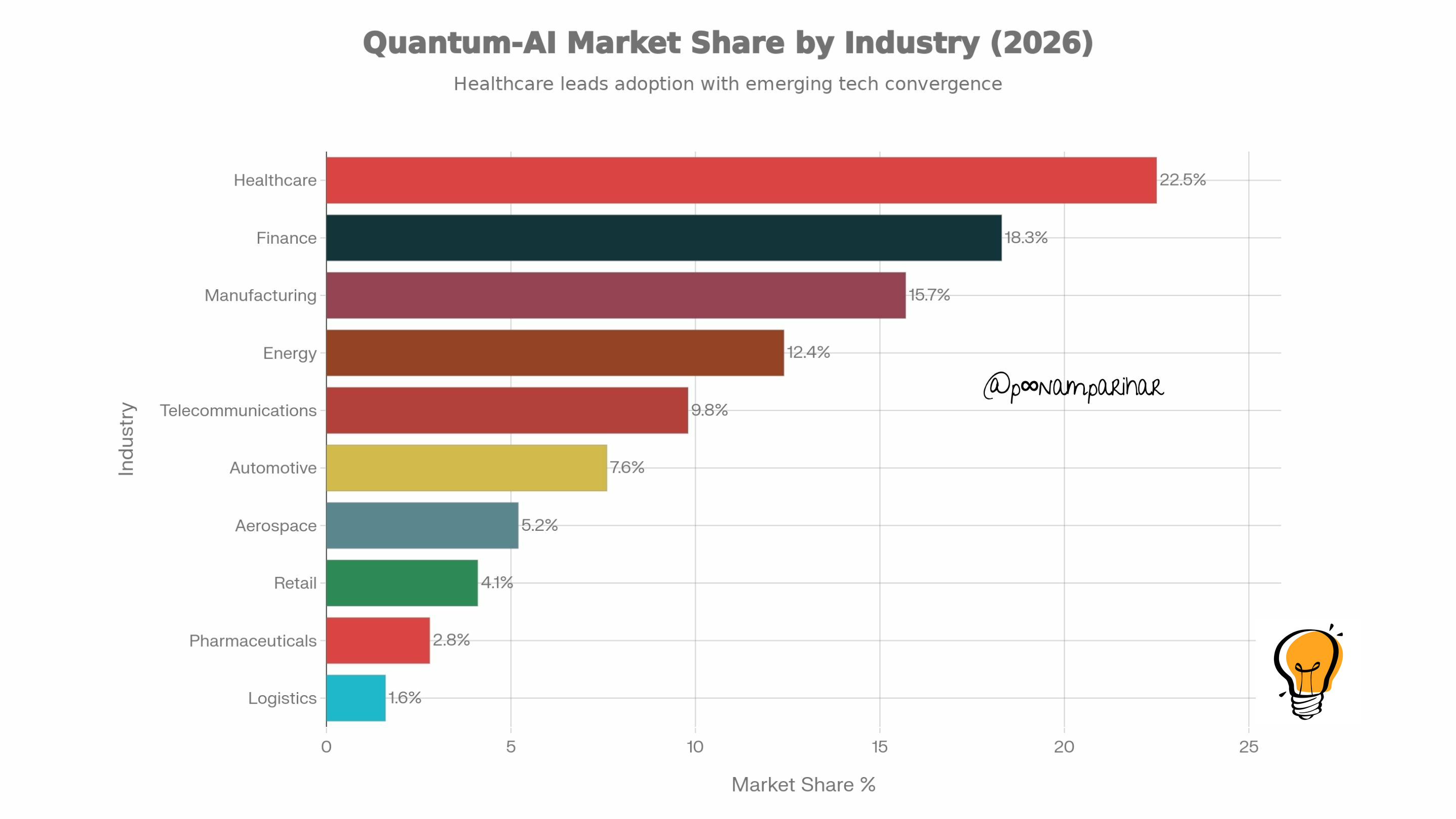
The industries benefiting most are those burdened by “NP-hard” combinatorial problems or high-dimensional data that exceed the limits of traditional GPUs.
Pharmaceuticals & Biotechnology: Leading the way by using quantum kernels to simulate molecular interactions and accelerate drug candidate screening.
example - a pharma team running one quantum‑enhanced scoring stage in a hit‑finding pipeline.
Logistics & Global Trade: Using hybrid solvers to optimize complex routing and fleet management in real-time.
example - a logistics provider using a hybrid solver for a specific lane optimization
Finance: Revolutionizing portfolio optimization and fraud detection through quantum-enhanced stochastic modeling.
example - a risk team using quantum‑inspired optimizers for nightly portfolio rebalancing and stress‑testing extreme scenarios.
Energy: Developing new materials for carbon capture and higher-efficiency battery chemistry.
example - a lab using quantum‑assisted simulation to explore new battery chemistries or carbon‑capture materials that would be infeasible to model classically.
In the telecommunications sector, 2026 marks the inflection point where laboratory pilots move to quantum-native infrastructure, specifically focusing on the integration of quantum computing into 5G/6G core networks and the "edge". the applications include Digital twin Network optimization at scale and Quantum AI predictive maintenance and of course quantum clocks for edge convergence. telco sector requires a full blown post, actually more than one, so I’ll have those in the 2026 pipeline.
High-Potential Startup Niches (2026)
In 2026, there is a significant “readiness gap” that provides a massive opening for early-stage startups. Smaller teams can often move faster than massive telcos for example in developing the niche software modules required for hybrid integration.
While giants like Google and IBM are building the hardware “bricks,” the industry is desperate for the “mortar” - the software abstraction and integration layers that make quantum useful for non-physicists.
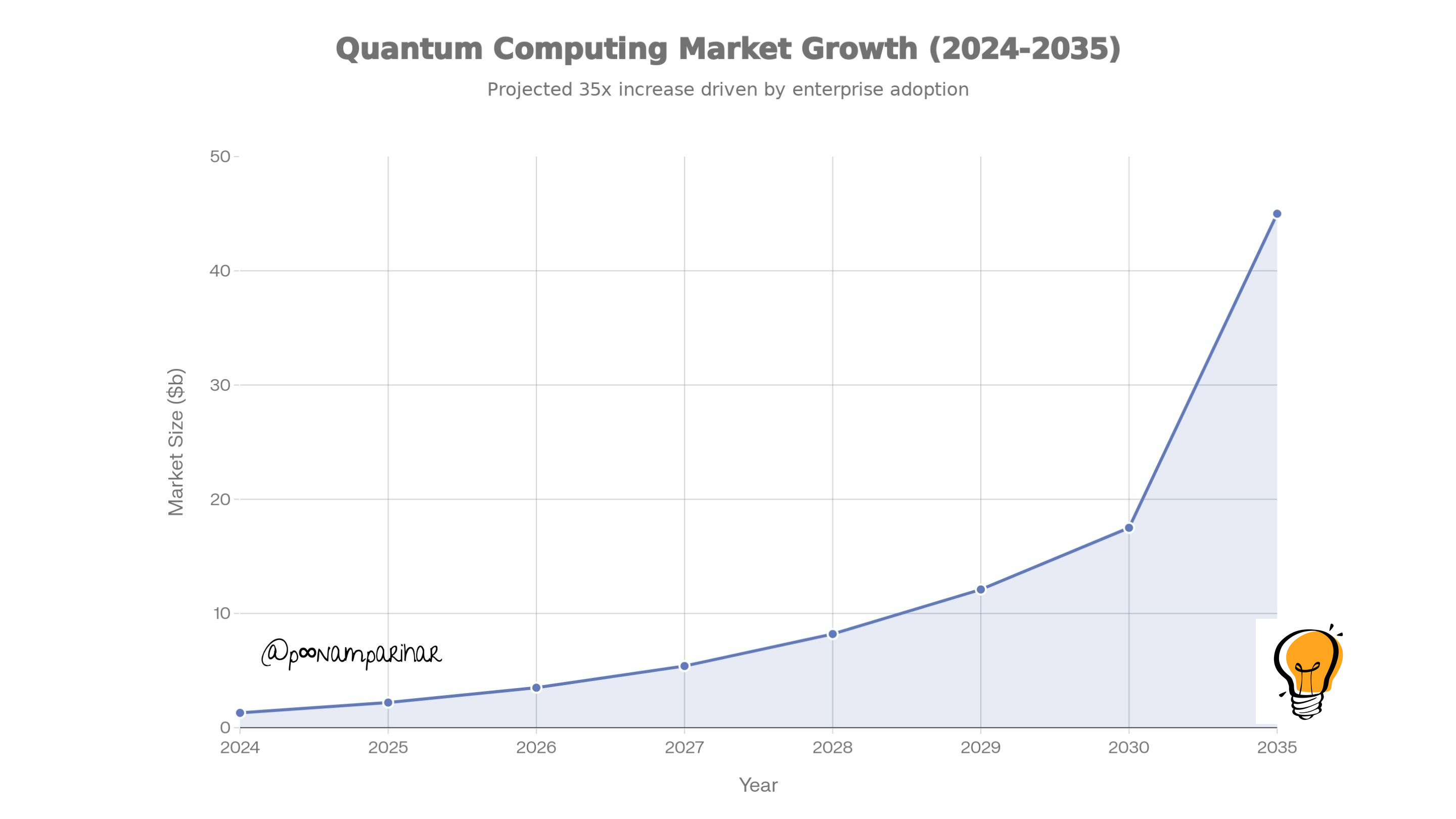
Investment in quantum technologies reached approximately $2$2 billion in 2024, a 50% increase from the previous year, with average round sizes growing as the path to commercial viability becomes clearer.
Venture capital in 2025 and 2026 has also shifted from funding “bare-metal” hardware companies to supporting “Infrastructure-as-Software” startups that bridge the gap to the application layer. In 2026, VCs are specifically looking for “frontier tech” that demonstrates interplay between Quantum and AI, particularly in sectors like logistics, biotech, and telecommunications.
In 2026, this “mortar” layer is still underbuilt, which is exactly why small, focused teams can move first and define the patterns everyone else will later copy.
Real-Time Multi-Agent Coordination
While current industry leaders are primarily focused on fortifying the long-term security of static infrastructure through Quantum Key Distribution (QKD), a significant opportunity remains untapped at the network’s edge. Most existing pilots prioritize high-level security protocols, yet they often overlook the critical need for hyper-dynamic, millisecond-scale coordination.
Modern urban environments are rapidly becoming home to “swarms” of autonomous assets. for example, our cities are quickly filling up with smart machines, like delivery drones and self-driving cars. To keep everything moving safely, a computer has to make a billion tiny decisions every second to prevent crashes and find the best routes. It’s like trying to solve a thousand Rubik’s Cubes in the blink of an eye, the system simply freezes or slows down. By using next-generation technology (like Quantum AI), we can break through that wall. Instead of just focusing on basic security, these new systems are designed to juggle all those complex moving parts at once. They can handle intense computational demands of high-density IoT environments, ie the city-wide coordination, making sure thousands of devices work together perfectly in real-time, even when traditional computers would get overwhelmed.
Early pilots of this kind of real‑time, swarm‑level coordination will start appearing in 2026 in high‑density logistics hubs, ports, and smart‑city districts, riding on the same hybrid quantum‑AI stacks described in the roadmap.
The Skill Gap and the Opportunities in 2026
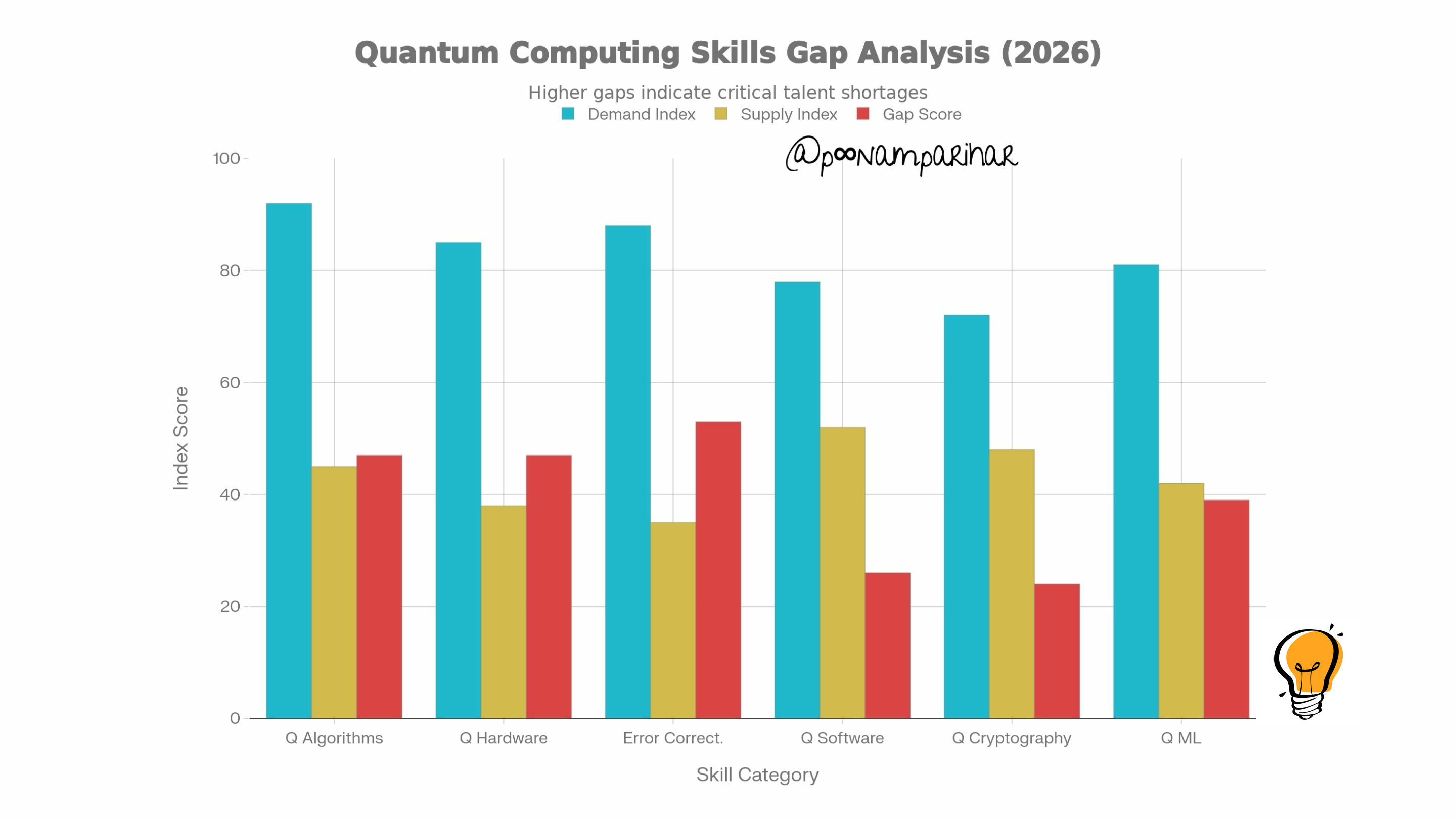
The quantum computing talent shortage is intensifying in 2026, with the skills gap most pronounced in hybrid system architecture (50-point gap between demand and supply) and quantum algorithm design (47-point gap). According to MIT’s Quantum Index Report 2025, the share of job postings requiring quantum skills in the United States has nearly tripled since 2023.
for the Quantum-AI startups, the success now depends less on academic research and more on applied engineering. The industry has moved way past the “lab phase,” creating a massive demand for professionals who can bridge the gap between high-level AI logic and low-level quantum hardware. The most critical hires are those who can navigate hybrid environments, ensuring that a problem is handled by the most efficient processor available, whether that is a GPU at the edge or a QPU in the cloud.
Critical Hiring Roles for 2026
Hybrid System Architect: The primary strategist who “shards” complex problems, deciding which parts of an AI model stay on classical hardware and which are sent to a quantum accelerator.
Edge Integration Engineer: A specialist in 5G/6G infrastructure who ensures quantum-enhanced AI modules can deploy as lightweight services within localized telecom nodes.
Quantum-Fluent Software Developer: A programmer proficient in modern hybrid frameworks (like CUDA-Q or PennyLane) who can call quantum subroutines without needing a PhD in physics.
Industry Domain Expert: A strategist with deep roots in a specific vertical (e.g., Logistics or Finance) to ensure the technology solves a high-value business pain point rather than a theoretical one.
Essential Technical Skill Sets
Applied Quantum Programming: Proficiency in using abstraction layers and APIs to implement quantum kernels within standard Python or C++ environments.
Latency-Critical Orchestration: Skills in managing real-time data flows between sensors at the edge and remote quantum backends, maintaining sub-10ms response times.
Algorithm Optimization: The ability to simplify AI models so they can run on the “noisy” quantum hardware currently available, focusing on efficiency over theoretical perfection.
Post-Quantum Security Basics: Familiarity with new encryption standards to ensure that all data flowing through a hybrid network is protected against future threats.
Navigating the Quantum-AI Convergence
The convergence of quantum computing and artificial intelligence in 2026 marks a unique turning point in the industry. For the first time, software-layer opportunities are moving faster than the hardware itself. Within high-performance networking and distributed computing, the evolution of next-generation infrastructure is opening a rare window where quantum-ready systems can be integrated from the ground up rather than as an afterthought.
The Role of Emerging Specialists
In this landscape, early-stage companies are finding success not by competing with tech giants on hardware scale, but by serving as essential integration specialists. The focus is shifting toward building the tools and domain-specific solutions that finally make quantum power accessible to large-scale enterprises. With market projections reaching over $20 billion by 2030, it is clear that this technology has moved from a research experiment to a strategic business necessity.
The Path to Practical Success
However, the sector demands a disciplined approach. The most successful teams over the next five years will be those that avoid over-promising and instead focus on delivering measurable value using the hardware available today. By building deep partnerships with enterprise customers and maintaining the flexibility to adapt as hardware matures, these companies can bridge the gap between theoretical potential and reliable, profitable operations.
The Opportunity for Founders
For those entering the field, the barriers to entry remain high due to a significant specialized skills gap, providing a clear advantage over slower, larger competitors. The transformation of complex networking and distributed intelligence is inevitable; the real opportunity lies in building the reliable bridge that allows enterprises to reach that future ahead of their competition.
This rare window effectively runs over the next five years, starting in 2026, as the first wave of quantum‑ready systems is designed into networks and AI infrastructure from day one rather than bolted on later.
Conclusion
2024 was the demo year;
2025 was the strategy‑deck year.
2026 is the first execution year, when serious builders quietly wire quantum into AI‑native systems, networks, and risk engines. For a founder, 2026 is the cheapest year to learn, integrate, and ship quantum‑ready products before this advantage becomes table stakes. as Quantum-AI becomes a personal operating plan for 2026 for some founders like us, the goal is simple - learn fast, ship one quantum‑ready surface area, and let compounding do the rest.

“Quantum belongs to 2026” is a strong hook but the real sell is: one narrow kernel, one measurable win. Otherwise it stays a deck 😅